
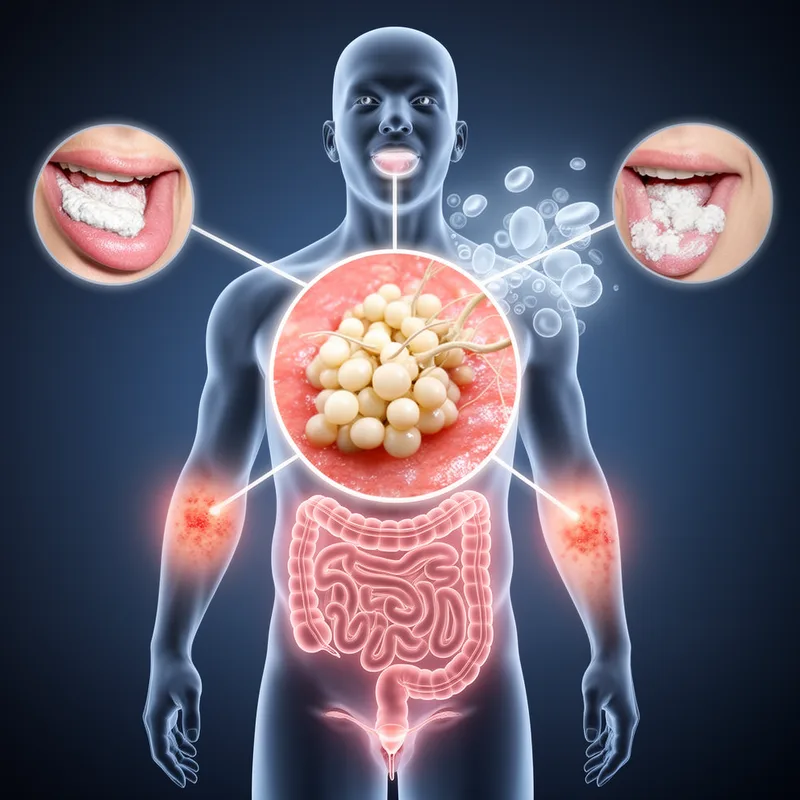
Candida albicans
- noun
- /ˈkændɪdə ˈæl.bɪ.kæns/
- Specialized
- Oral thrush is often caused by an overgrowth of Candida albicans in the mouth.
Examples
-
Doctors prescribed antifungal medication to treat the Candida albicans infection.
-
Many patients with HIV are at risk of Candida albicans infections.
-
Patients with weakened immune systems are more susceptible to infections by Candida albicans.
-
The doctor diagnosed her with a Candida albicans infection.
-
Doctors often prescribe antifungal medication to treat infections caused by Candida albicans.
-
In individuals with weakened immune systems, Candida albicans can lead to serious health issues.
-
Good hygiene practices can help reduce the risk of infections from Candida albicans.
Synonyms

A fungus that infects the mouth, skin, gut, or vagina and causes thrush and other infections
Surface Forms
Morphology
Candida + albicans
The form is a taxonomic binomial (genus + specific epithet), so a learner who knows 'Candida' (a yeast) and the idea of species names can infer this refers to a particular kind of Candida rather than a metaphorical phrase. However, the specific epithet 'albicans' is Latin and not a common English word, and the clinical implication that this species causes human infections is not directly derivable from the constituents, making the overall meaning only partially predictable.
Etymology
Candida albicans gets its name from Latin words for 'white': Candida and albicans. The fungus often makes white patches in the mouth or on the skin, so the name points to that common sign.

