
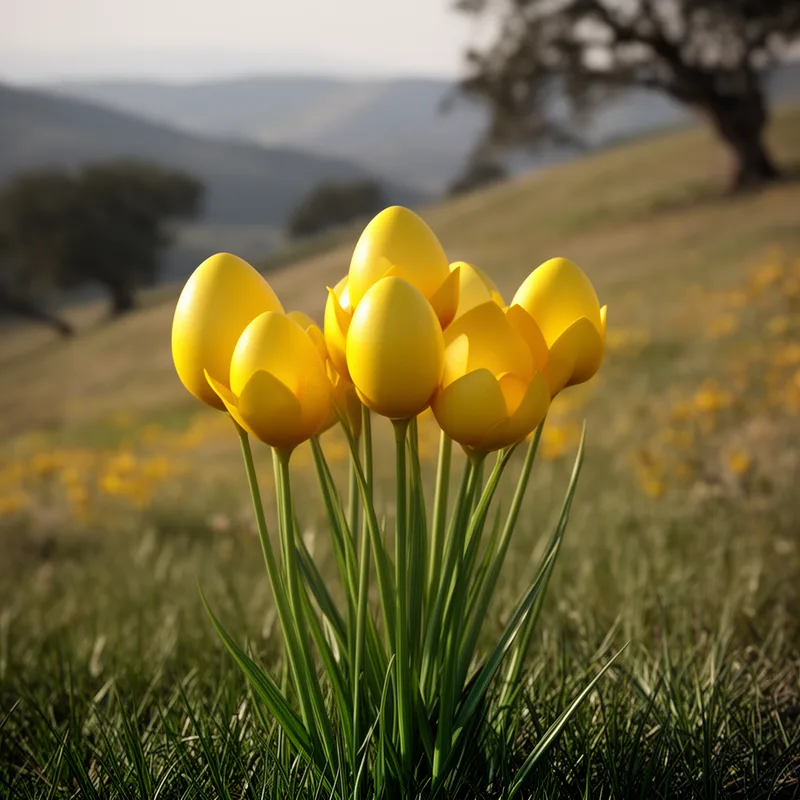
Calochortus amabilis
- noun
- Specialized
- Gardeners in northern California often plant Calochortus amabilis for its distinctive egg-shaped flowers.
Examples
-
The bright yellow blooms of the Calochortus amabilis light up the California hillsides in spring.
-
Botanists consider Calochortus amabilis to be an important native wildflower in the region.
-
The Calochortus amabilis blooms beautifully in the spring.
-
Have you seen the Calochortus amabilis in bloom?
-
In the spring, the vibrant clusters of Calochortus amabilis brighten the meadows of northern California.
-
Botanists often study Calochortus amabilis for its unique yellow, egg-shaped flowers native to the region.
-
Many hikers admire the beautiful Calochortus amabilis that flourish along the trails in northern California.
Synonyms

A small flower plant from northern California with bright yellow egg-shaped blooms in open clusters

A plant from northern California with groups of bright yellow egg-shaped flowers
Surface Forms
Morphology
Calochortus + amabilis
This is a Latin binomial: 'Calochortus' names the genus (a bulbous herb) and 'amabilis' is a Latin adjective meaning 'lovely' — so a learner who knew both parts could infer something like 'a lovely Calochortus'. However, as a scientific species name it functions as a proper noun and does not directly convey the everyday sense 'a species of globe lily' without knowledge of taxonomic naming conventions or Latin, so the compositionality is only partial.
Etymology
Calochortus amabilis comes from old Greek and Latin words: Calochortus carries the idea of 'beautiful' and amabilis means 'lovely'. Gardeners named the small, grass-like plant for its bright, clear yellow, egg-shaped flowers, so the name points to a 'lovely' or 'beautiful' flower.

