
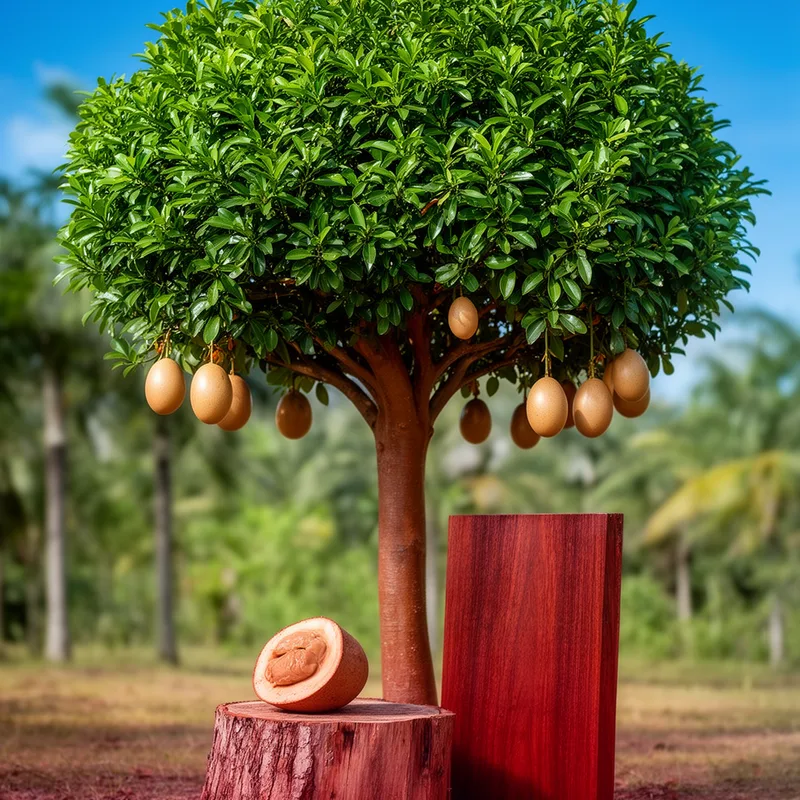
Calocarpum zapota
- noun
- Specialized
- The fruit of the Calocarpum zapota is prized for its sweet flavor in Central America.
Examples
-
Timber from the Calocarpum zapota is sometimes used as a substitute for mahogany in furniture.
-
Many farmers cultivate Calocarpum zapota for its delicious fruit.
-
Scientists studied the medicinal properties of Calocarpum zapota in traditional remedies.
-
The Calocarpum zapota tree can grow up to 30 feet tall.
-
The fruit of the Calocarpum zapota tree is often enjoyed fresh or in desserts due to its sweetness.
-
In tropical regions, the Calocarpum zapota is cultivated for its tasty, egg-shaped fruit.
-
The wood of the Calocarpum zapota tree is highly valued for its resemblance to mahogany.
Synonyms

A tropical American tree with sweet egg-shaped fruit and wood like mahogany
A tropical American tree with mahogany-like wood and sweet orange fruit called mamey sapote
Surface Forms
Morphology
Calocarpum + zapota
This is a binomial scientific name (genus + species). If a learner knows that 'Calocarpum' is a genus of trees, then 'Calocarpum zapota' transparently denotes a particular species of that genus (i.e., a type of tree); the second element is a proper-name label rather than an independent lexical meaning. Scientific naming is a cross-linguistic compositional pattern, so the overall referent (a specific tree) is derivable from the constituents.
Etymology
Calocarpum zapota mixes Calocarpum (from words for 'beautiful fruit') and zapota (from a local word 'zapota' for the sweet, soft fruit), creating a simple picture of a tree with lovely, tasty fruit. So the name fits this tropical American tree known for its sweet, egg-shaped fruit and hard wood like mahogany.

