
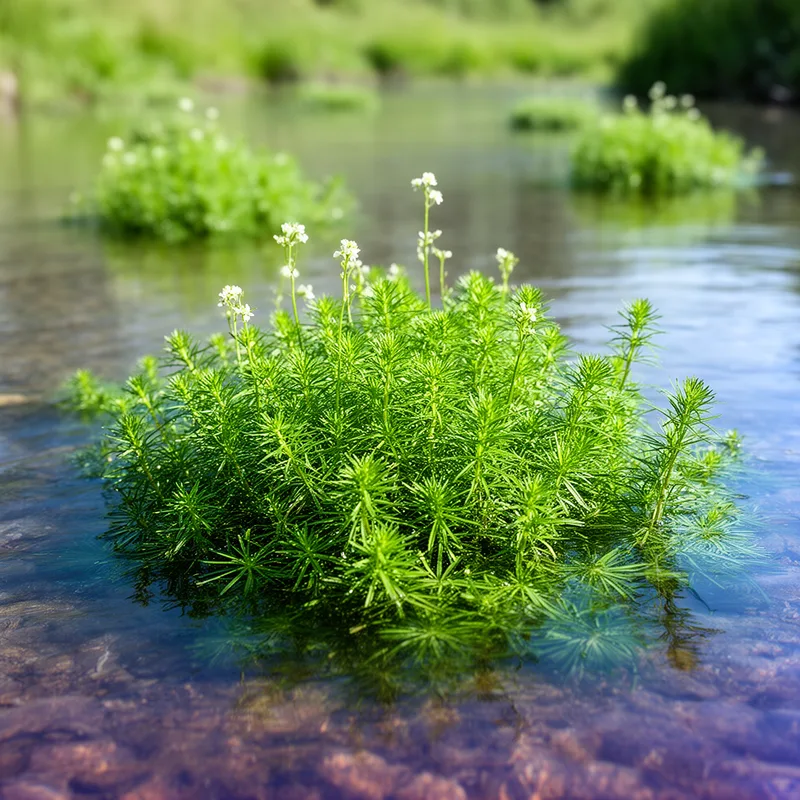
Callitrichaceae
- noun
- /ˌkælɪˈtraɪkeɪˌsi/
- Specialized
- The Callitrichaceae family includes many species of aquatic herbs.
Examples
-
Many species within the Callitrichaceae serve as important indicators of freshwater ecosystem health.
-
The Callitrichaceae are often found in clean, slow-moving streams across Europe and North America.
-
Botanists recently reclassified some genera previously included in the Callitrichaceae.
-
Are Callitrichaceae plants found in freshwater habitats?
-
Many species within the Callitrichaceae family thrive in freshwater habitats worldwide.
-
The Callitrichaceae are important for maintaining the ecological balance in aquatic environments.
-
You can often see Callitrichaceae growing in clear ponds and streams, showcasing their adaptability.
Synonyms

A group of small water plants that live in ponds and streams
Compounds
Surface Forms
Morphology
Callitrichaceae = Callitriche (opaque) = Callitriche + aceae
The formation uses a specialized Latin taxonomic suffix '-aceae' (family name) that is not productive or familiar to average learners, so the meaning 'family of Callitriche' is not readily derivable.
Etymology
Callitrichaceae comes from the plant name Callitriche, which is made of Greek parts kalli- meaning 'beautiful' (as in calligraphy) and -trich meaning 'hair' or 'hair-like', a picture of its thin leaves. The ending -aceae means 'plant family', so Callitrichaceae is the family of those 'beautiful, hair-like' water plants.

