

Caenorhabditis


 1
9.9
- noun
- /ˌsiːnəˈræbdɪtɪs/
- Specialized
- The Tbx20 orthologue, mab-9, is required for the development of the Caenorhabditis elegans hindgut, whereas several vertebrate Tbx20 genes promote heart development.
- Caenorhabditis elegans
- Caenorhabditis elegans model
Examples
-
You're nineteen thousand ninety-nine genes of Caenorhabditis elegans and seventeen thousand forty-four genes of Homo sapiens.
Fiction book (2001) -
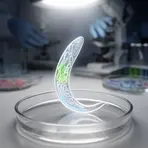
I'm Caenorhabditis elegans, a worm of mud and dirt, presently residing in a petri dish in a green and white-walled research laboratory.
Fiction book (2001) -
A few model organisms have greatly contributed to biological research in the last decades, among them the nematode Caenorhabditis elegans.
Academic text (2017) -
We generated a draft assembly and annotation of the genome of the free-living nematode Oscheius tipulae, a distant relative of the model Caenorhabditis elegans.
Academic text (2017) -
A few model organisms have greatly contributed to biological research in the last decades, among them the nematode Caenorhabditis elegans.
-
Mapping the genes of fruit flies and the tiny nematode worm, Caenorhabditis elegans, for example, will help scientists understand similar biochemical functions in humans.
-
Princeton University biologist Coleen Murphy and her colleagues study aging in the roundworm, Caenorhabditis elegans.
Compounds
- Specialized
1
8.2
A small transparent roundworm that scientists use in labs to study genes and how animals grow
Surface Forms
Etymology
Caenorhabditis comes from Greek parts: caeno- meaning 'new' and -rhabditis meaning 'rod' or 'stick'. So the name gives an image of a tiny, stick-like worm and helps you remember it is a small roundworm often used in labs.