
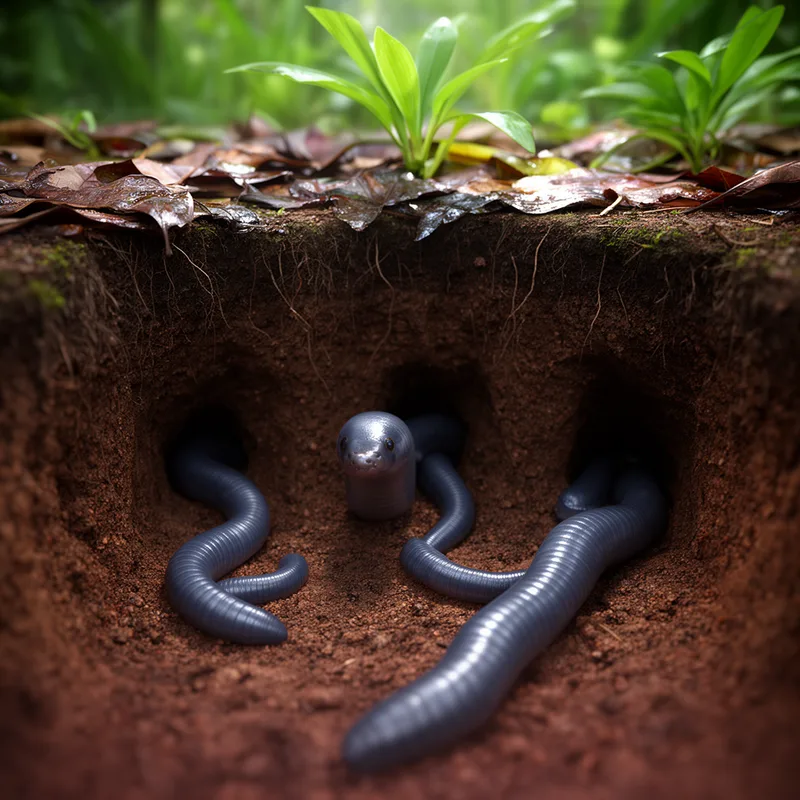
Caeciliidae
- noun
- /siːˈsɪliˌaɪdi/
- Specialized
- The Caeciliidae are known for their elongated, worm-like appearance and subterranean lifestyle.
Examples
-
Researchers studied the Caeciliidae to understand the evolution of limbless amphibians.
-
Members of the Caeciliidae family are found primarily in tropical regions.
-
The Caeciliidae family includes fascinating creatures.
-
Many Caeciliidae species are found in tropical regions.
-
Members of the Caeciliidae family are found primarily in tropical regions, where they burrow underground.
-
Researchers studied the Caeciliidae to understand how these legless amphibians evolved to thrive in their environments.
-
The Caeciliidae are distinguished by their elongated, worm-like bodies and live a mostly hidden life beneath the soil.
Synonyms
A family of legless amphibians with long bodies that live underground

A group of limbless amphibians that look like worms and live underground in warm places

A group of legless, worm-like amphibians that live mostly underground in tropical regions
Compounds
- Specialized
A group of limbless amphibians that look like worms and live underground in warm places
Surface Forms
Morphology
Caeciliidae = Caecilia (opaque) = Caecilia + idae
The formation is a Latin/Neo‑Latin taxonomic name (genus stem + -idae) used in scientific classification and is not semantically transparent to general English learners.
Etymology
Caeciliidae comes from the Latin word caecus, meaning 'blind', plus the family ending -idae. Because many of these long, legless amphibians live underground and have very small or hidden eyes, the name helps you remember they are 'blind' or burrowing animals.

