
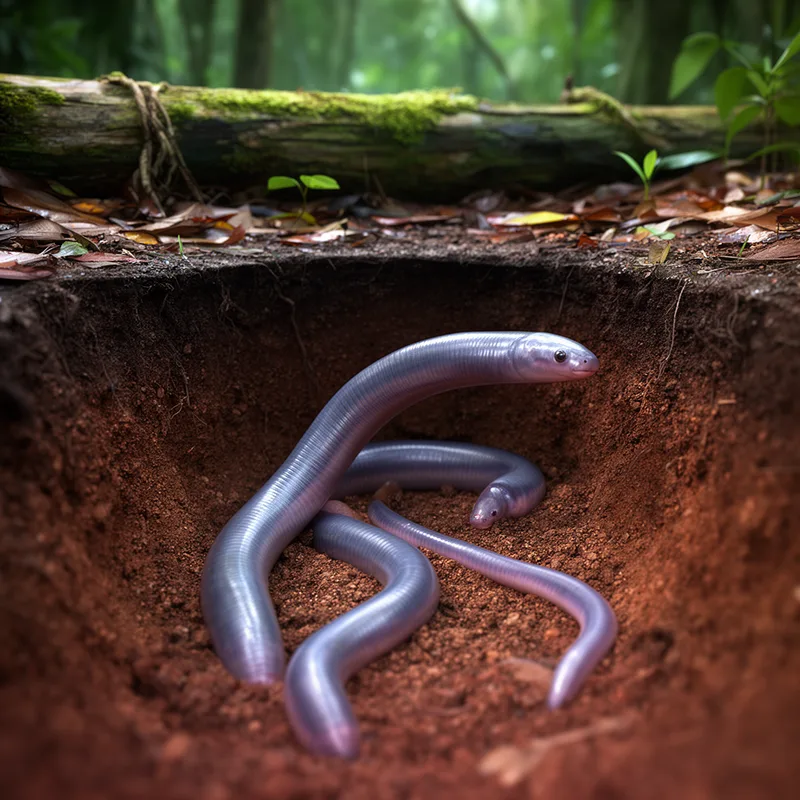
Caeciliadae
- noun
- /siːˈsɪliˌeɪdi/
- Specialized
- Unlike other amphibians, members of the Caeciliadae lack limbs and have elongated, segmented bodies.
Examples
-
The Caeciliadae are adapted for a subterranean lifestyle, making them difficult to observe in the wild.
-
Scientists studying rainforest habitats often encounter the Caeciliadae beneath logs and moist soil.
-
The Caeciliadae family is fascinating to study.
-
Did you know that Caeciliadae are often mistaken for snakes?
-
Scientists studying rainforest habitats often encounter the Caeciliadae beneath logs and moist soil.
-
The Caeciliadae are adapted for a subterranean lifestyle, making them difficult to observe in the wild.
-
Unlike other amphibians, members of the Caeciliadae lack limbs and have elongated, segmented bodies.
Synonyms

A group of limbless amphibians that look like worms and live underground in warm places
A group of legless, worm-like amphibians that live mostly underground in tropical regions
A family of small legless amphibians that look like worms and live underground
Surface Forms
Morphology
Caeciliadae = Caecilia (opaque) = Caecilia + dae
The form is a Latin taxonomic formation (genus name + family suffix) that requires specialised biological knowledge; an average learner cannot derive the meaning from the parts.
Etymology
Caeciliadae comes from the Latin family name Caecilia, built on the root caecus meaning 'blind'. That's an easy memory: these legless, burrowing amphibians often have very small or hidden eyes and live underground, so the name points to their hard-to-see, subterranean life.

