
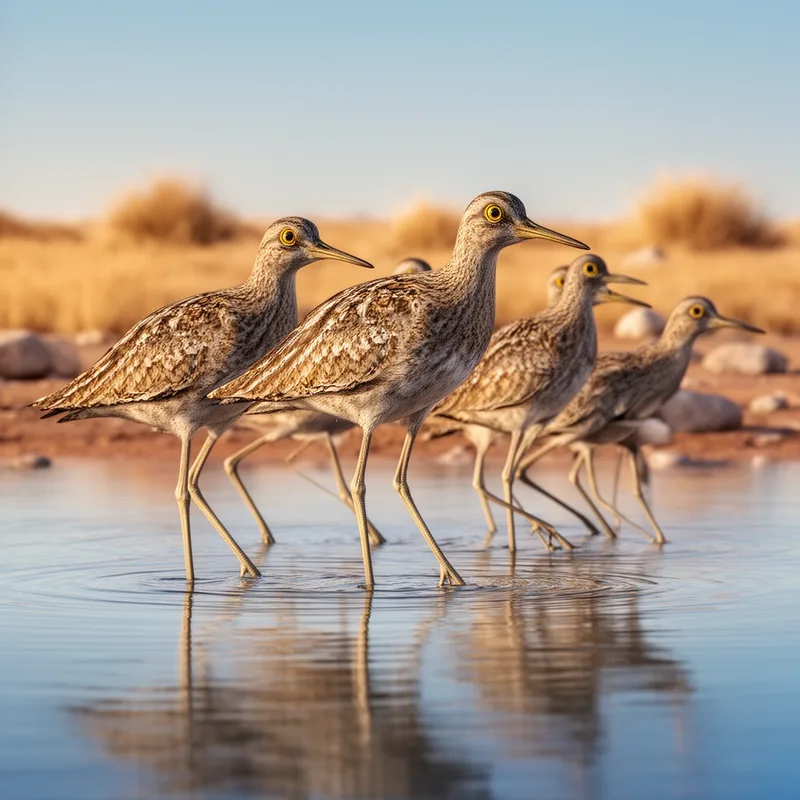
Burhinidae
- noun
- /ˌbɜːrɪˈniːdeɪ/
- Specialized
- The Burhinidae family includes species like the stone-curlew, which are often found in warm, coastal habitats.
Examples
-
The large wading birds of the Burhinidae family have adapted to thrive in arid environments.
-
In some shorebirds, such as oystercatchers (Haematopodidae) and thick-knees (Burhinidae), the young are fed by the parents, whereas in many others the young require less care; the parents only brood them and defend them from predators.
Academic text (2006) -
Birdwatchers in the region are excited to spot the unique Burhinidae, known for their distinctive appearance.
Synonyms
A group of large birds called stone curlews with large yellow eyes that are active at night
Compounds
- Specialized
A group of large birds called stone curlews with large yellow eyes that are active at night
Surface Forms
Morphology
Burhinidae = Burhinus (opaque) = Burhinus + idae
This is a specialized taxonomic formation (genus name + '-idae' for family) that an average learner cannot reliably interpret from its parts.
Etymology
Burhinidae comes from the scientific name Burhinus, which is made from Greek words bous 'ox' and rhinos 'nose', plus the family ending -idae. So it means 'ox-nosed', a simple image to help you remember these large wading birds called stone-curlews with strong, thick beaks that live in warm places.

