

Brix scale
- noun
- /brɪks skeɪl/
- Specialized
- A reading of 20 on the Brix scale indicates a solution contains 20% sugar by weight.
Examples
-
Juice manufacturers use the Brix scale to measure the sugar content of their products.
-
The Brix scale is commonly used in the wine industry to determine grape ripeness.
-
The Brix scale measures sugar concentration in juices.
-
On the Brix scale, higher numbers indicate sweeter solutions.
-
A reading of 20 on the Brix scale indicates a solution contains 20% sugar by weight.
-
Juice manufacturers use the Brix scale to measure the sugar content of their products.
-
The Brix scale is commonly used in the wine industry to determine grape ripeness.
Synonyms
 191
2.8
191
2.8

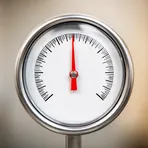
A device with marks that shows measurements like weight or temperature


 1
8.8
1
8.8
A measure of how much sugar is in a liquid like grape juice or wine
Surface Forms
Morphology
The compound combines a proper-name label for a measurement system ('Brix') with the common noun 'scale' (a measurement system/instrument), so a learner who knows both constituents can infer it is a scale for measuring sugar concentration. Although 'Brix' is a technical term, the noun-noun composition is fully compositional and follows a standard naming pattern, making the meaning transparent to learners who know the parts.
Etymology
Brix scale is named after a 19th-century scientist, Adolf Brix, who made an easy way to measure how much 'sugar' is in a liquid. So the Brix scale gives a number showing the 'percent' of sugar by weight, which is why people use it to check how sweet or ripe something is.