
Brinell number
- noun
- /brɪˈnɛl ˈnʌmbər/
- Specialized
- The steel sample was found to have a Brinell number of 250, indicating moderate hardness.
Examples
-
A higher Brinell number indicates a harder material.
-
Manufacturers often specify the Brinell number to ensure consistent quality of materials used in production.
-
Engineers use the Brinell number as a standard metric when comparing different metal alloys.
-
The Brinell number is crucial for assessing material hardness.
-
Engineers use the Brinell number as a standard metric when comparing different metal alloys.
-
Manufacturers often specify the Brinell number to ensure consistent quality of materials used in production.
-
The steel sample was found to have a Brinell number of 250, indicating moderate hardness.
Surface Forms
Morphology
Brinell + number
‘Brinell’ is a proper name/eponym with no lexical clue to material properties, and ‘number’ is generic, so a B1 learner knowing both words would not predict that the phrase names a specific hardness measure. The term is technical and requires domain knowledge (Brinell hardness test) rather than compositional inference, so the meaning is not derivable from its parts.
Etymology
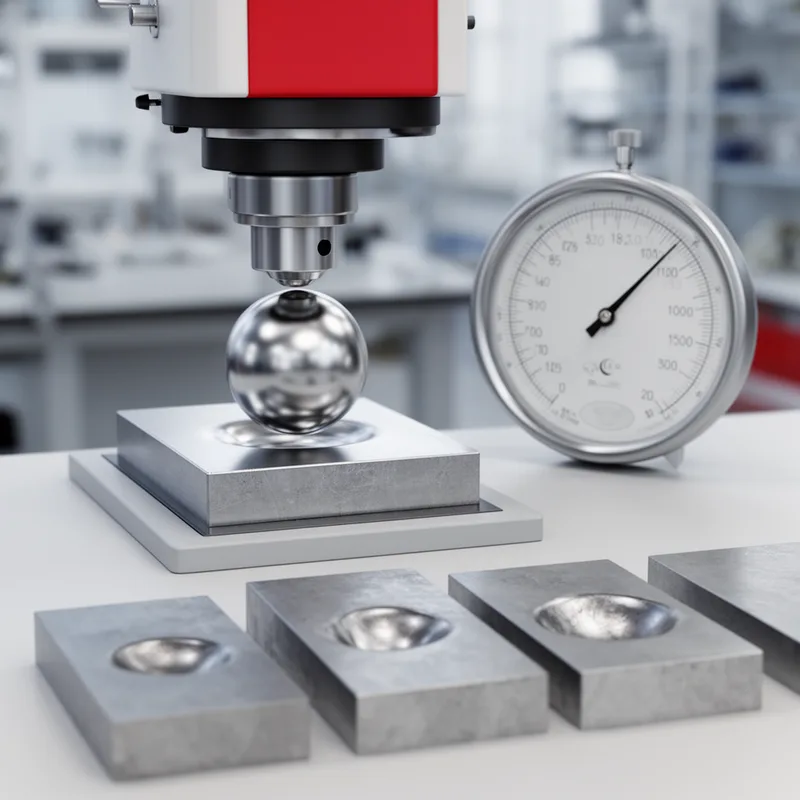
Brinell number is named after a man called Brinell who pressed a hard steel ball into metal to make a small dent. He measured the dent and gave it a number to show the metal's 'hardness', so today the phrase means the measured value of how hard a material is.

