
Brassica oleracea gongylodes
- noun
- Specialized
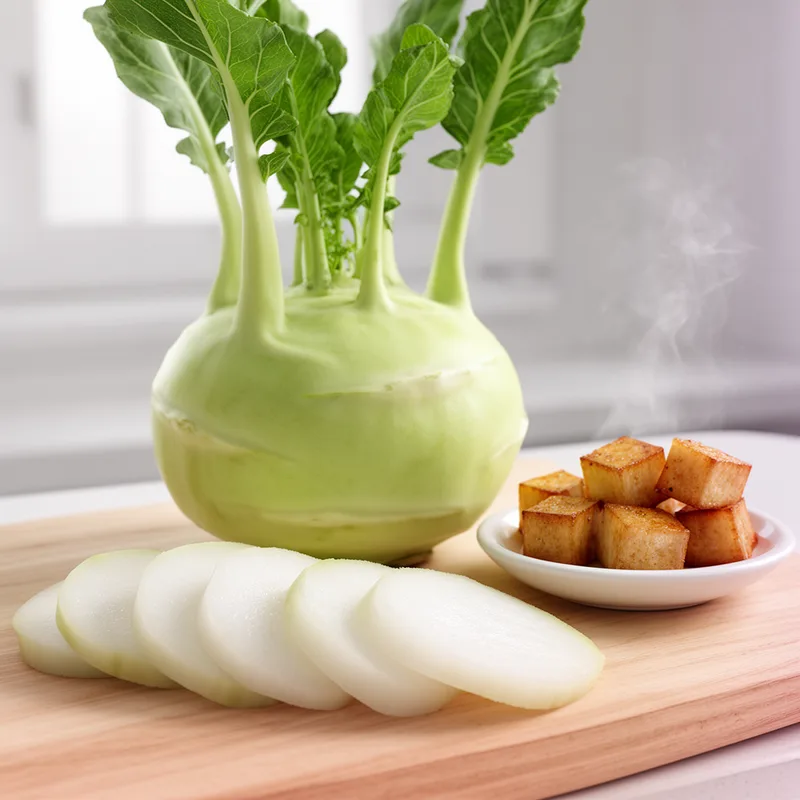
- Brassica oleracea gongylodes has a unique, turnip-like shape and is often used in salads for its crisp texture.
Examples
-
I bought some Brassica oleracea gongylodes at the farmer's market.
-
In culinary uses, Brassica oleracea gongylodes can be eaten raw or cooked in a variety of dishes.
-
Brassica oleracea gongylodes is widely cultivated across Europe and Asia for its crisp, edible stem.
-
Gardeners appreciate Brassica oleracea gongylodes for its fast growth and resistance to pests.
-
Have you ever tried Brassica oleracea gongylodes in a salad?
-
Brassica oleracea gongylodes is a versatile vegetable that can be enjoyed both raw and cooked in various recipes.
-
Brassica oleracea gongylodes can be found in many grocery stores, appreciated for its distinct flavor and nutritional benefits.
Synonyms

 4
8.4
4
8.4

A round vegetable with a thick edible stem like a cabbage

A vegetable with a round thick stem you can eat cooked or raw
Surface Forms
Morphology
Brassica + oleracea + gongylodes
This is a formal botanical (Latin) taxonomic name: knowing 'Brassica' may indicate the cabbage family, but the species/varietal epithets ('oleracea', 'gongylodes') are specialized Latin/Greek elements that a B1 learner would not interpret to mean 'kohlrabi' or 'enlarged turnip‑shaped stem'. Taxonomic names are not compositional in everyday English, so the overall referent cannot be derived from the constituent words by an average learner.
Etymology
Brassica oleracea gongylodes gets its name from gongylodes, a word meaning 'round', because the plant has a swollen, turnip-like stem. So the name gives a clear picture: it points to the round edible stem that makes this cabbage what we call kohlrabi today.