

Bow Street Runner


 1
9.9
1
9.9
- noun
- Archaic
- The Bow Street Runners were the first organized police force established in London during the 18th century.
Examples
-
How long had this poor woman been left in the bitter cold while the waterman had sent for a Bow Street Runner to investigate?
Fiction book (1999) -
In the story, a Bow Street Runner tracks down a notorious criminal throughout the streets of London.
-
I read it in a book about a Bow Street Runner.
Fiction book (1993) -
You said we might all be questioned by Sir Robert or the Bow Street Runners.
Fiction book (1993) -
She regarded the captain of the Bow Street Runners rather flirtatiously.
Fiction book (2001) -
He had enlisted in the Foot Patrol at age eighteen, was promoted to the Day Patrol within a year, and a few months later was chosen by Sir Ross Cannon to complete the elite force of a half dozen Bow Street Runners.
Fiction book (1999) -
During the crime wave, many citizens relied on the Bow Street Runners for their safety and justice.
Synonyms
 8
9.2
8
9.2
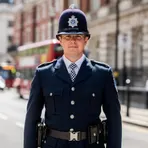
A person who works as a police officer in Britain
Surface Forms
Morphology
This is a historical proper-name for a specific London policing institution, so its institutional meaning (an early organized police force) is not derivable from the parts: 'Bow' is a place name, 'street' is a road, and 'runner' is a person who runs or delivers. A B1 learner who knows the constituent words would not predict the specialized, culture-specific policing sense without prior exposure.
Etymology
Bow Street Runner comes from Bow Street in London, where the first organized group of men worked at a local court, and they were called runners because they ran out to chase and arrest criminals. So the name came to mean 'an early police officer who hunted criminals'.