
Bose-Einstein statistics
- noun
- /ˈboʊz aɪnˈstaɪn stəˈtɪstɪks/
- Specialized
- According to Bose-Einstein statistics, particles such as photons can occupy the same quantum state.
Examples
-
It obeys Bose-Einstein statistics at low temperatures.
Academic text (1996) -
I also made a remark on how k is part of Bose-Einstein statistics, which last I looked also has ideal properties since photons are indistinguishable.
Blog text (10) -
At extremely low temperatures, a system of identical particles can be described using Bose-Einstein statistics.
-
In a Bose-Einstein condensate, the particles collectively exhibit behaviors predicted by Bose-Einstein statistics.
Surface Forms
Morphology
Bose-Einstein + statistics
Although 'statistics' is a familiar, transparent word, 'Bose-Einstein' is an eponymic technical label (two physicists' names) with no lexical meaning a B1 learner can decompose. The specific sense—distribution rules for identical integer‑spin particles in quantum mechanics—requires specialist knowledge, so the overall phrase is not derivable from its parts for an average B1 learner.
Etymology
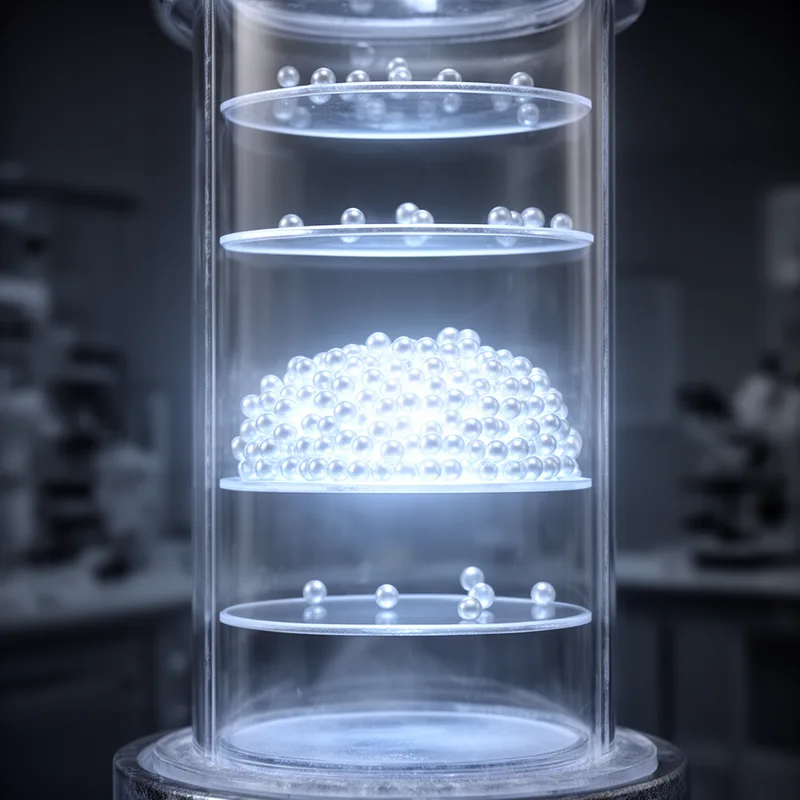
Bose-Einstein statistics is named after two scientists, Bose and Einstein, who found that some tiny particles do not mind being in the same state and can gather together. So, think of people happily sitting all on the same bench — this image explains why the name describes particles that 'pile up' in one state and make effects like Bose-Einstein condensation.

