
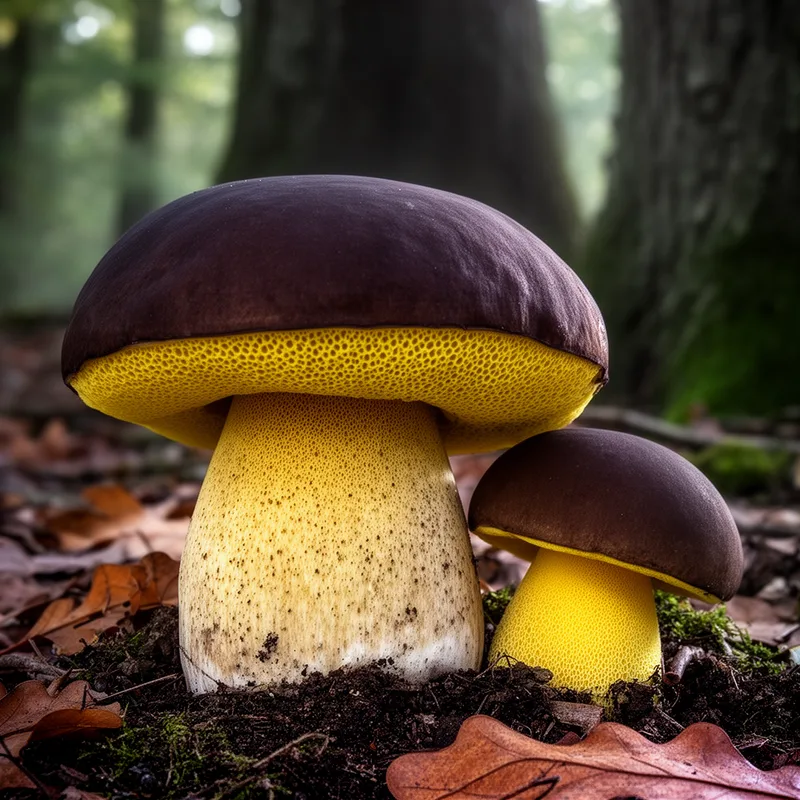
Boletus pulverulentus
- noun
- /boʊˈliːtəs pʌlvəˈrɛləntəs/
- Specialized
- Identifying Boletus pulverulentus is easier when the cap is still young and the pore surface remains bright yellow.
Examples
-
The chef prepared a seasonal soup using wild Boletus pulverulentus collected that morning.
-
We foraged in the forest and found several Boletus pulverulentus growing near the old oak tree.
-
Look at this Boletus pulverulentus!
-
I found a Boletus pulverulentus in the forest yesterday.
-
The chef prepared a seasonal soup using wild Boletus pulverulentus collected that morning.
-
Identifying Boletus pulverulentus is easier when the cap is still young and the pore surface remains bright yellow.
-
We foraged in the forest and found several Boletus pulverulentus growing near the old oak tree.
Surface Forms
Morphology
Boletus + pulverulentus
The binomial is compositionally built from 'Boletus' (a bolete mushroom) plus the epithet 'pulverulentus' which literally means 'powdery/dusty' in Latin, so a learner who knew both parts could infer a 'powdery bolete' species. However, the epithet is a Latin/technical form (not an English word and not listed in the provided dictionary) and the whole functions as a scientific proper name rather than a common compositional phrase, so the meaning is not fully predictable for an average B1 learner.
Etymology
Boletus pulverulentus comes from Latin words: Boletus names a kind of 'mushroom' with small 'pores' under the cap, and pulverulentus means 'powdery' or dusty. So the name gives a clear picture of a bolete with a dusty cap and yellow pores, which helps you remember this edible species.

