
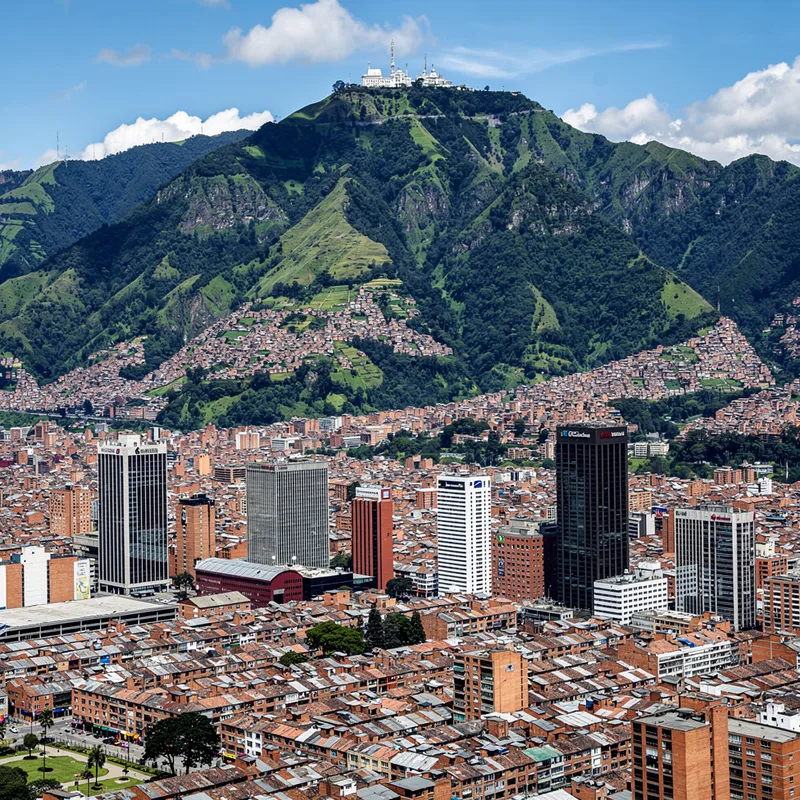
Bogota
 17
2.6

- proper noun
- /boʊˈɡoʊtə/
- Clubhouses exist overseas, too, for example, in Bogota, Colombia, and Esslingen, Germany.
- Bogota, Colombia
- mayor of Bogota
- Bogota conference
Loading YouTube…
Watch on YouTubeWe did Mexico, Medellin, Bogota, Peru.
- We did Mexico, Medellin, Bogota, Peru.
- New to me, and in the rich neighborhoods of Bogota, people wore T-shirts saying Save the Hippos.
- She had been born in Medellin and grew up in Bogota.
- So off they go to Colombia, to Bogota.
- One of the nice things about these wonderful museums in downtown Bogota is that they are free on weekends.
- One of our mentors in cultural agents is the ex mayor of Bogota, Colombia.
- And then I think we stayed a night in Bogota and then we went to the airport the next day.
- Like Bogota has a mountain and they're right up against it, which prohibit significant development.
- I'll show both Bogota and Quito much purer examples of building new towns on the basis of little competition.
- It's being used in Bogota, Colombia, to look at different kinds of recreational offerings and in upstate New York as well.
- No, for the most part, because it wasn't too hard to sit there and say I got to meet with this person on the north side of Bogota and a hotel.
Examples
-
Let's meet in Bogota.
-
One of the nice things about these wonderful museums in downtown Bogota is that they are free on weekends.
-
so she would come from Bogota, pick me up and make sure
-
And then I think we stayed a night in Bogota and then we went to the airport the next day.
-
So let's go meet him in Bogota and get him excited.
-
The doctor said he could get us to Bogota.
-
That photo was taken five years after Nick and I met, when I was at State Department in Bogota.
-
I go to Bogota and Barranquilla, and I have lots of friends.
-
As a kid, the bus ride from school to my family's house in Bogota seemed eternal.
Blog text (25) -
The flight to Bogota offers stunning views of the Andes mountains.
Surface Forms
Etymology
Bogota takes its name from the old local word Bacatá, used by the Muisca people, which meant 'planted fields' or 'farm fields'. So the city's name points to its place on a high, fertile plateau where people once grew crops.