
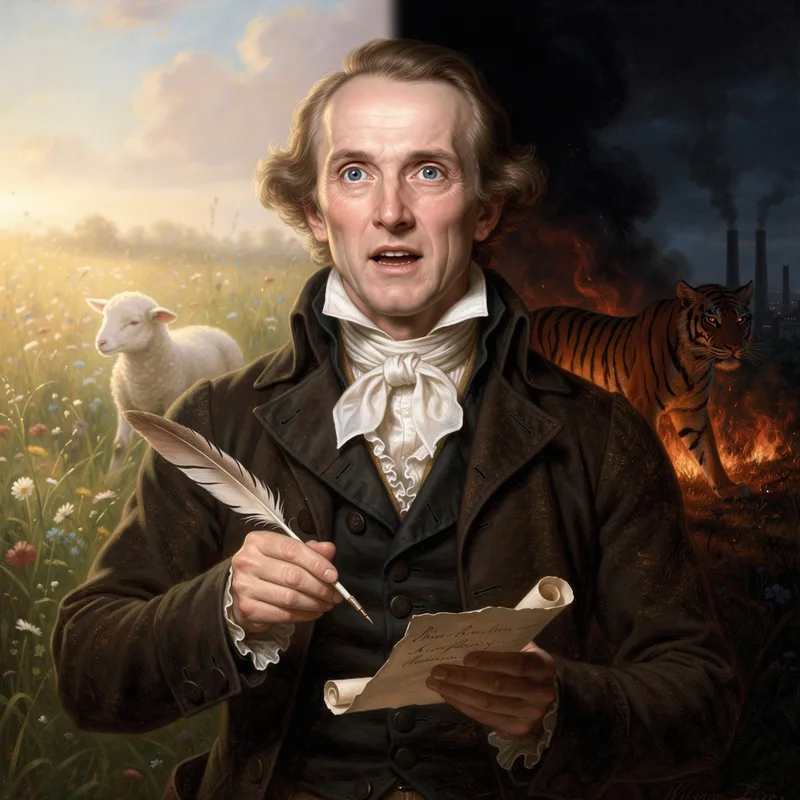
Blake
 10
7.0

- proper noun
- /bleɪk/
- The poems of Blake reveal his innovative approach to both art and literature.
- William Blake
- Wordsworth and Blake
Loading YouTube…
Watch on YouTubeI think William Blake, who wrote that eternity loves time production.
- I think William Blake, who wrote that eternity loves time production.
Examples
-
We have some books of Blake's paintings, too.
-
I have been writing this essay about Blake's trial for more than a year now.
Academic text (1994) -
But his art and his poetry are in fact completely intertwined and for Blake his words were images.
-
As William Blake wrote, "The out worm forgives the plow."
-
It's Blake's The Temptation of Eve from Paradise Lost.
-
From 1808 to 1819, Blake sold perhaps a couple of dozen engravings per year.
Academic text (1994) -
For the next twenty-three years, Blake drew, painted, engraved, printed, colored, stippled, and lithographed.
Academic text (1994) -
The best concise Romantic rebuttal is probably Blake's: "One Law for the Lion and Ox is Oppression."
Academic text (1990) -
In his works, Blake combines powerful imagery with profound themes of spirituality.
-
Many artists have been inspired by the mystical vision of Blake and his unique style.
Synonyms
 6
6.3
An English poet and artist who made imaginative poems and pictures
Surface Forms
Etymology
Blake comes from old English words blæc meaning 'black' and blac meaning 'pale', which were used as nicknames for someone with very dark or very light hair or skin. That's why Blake is now a family name and a personal name.