
Betula pubescens
- noun
- UK
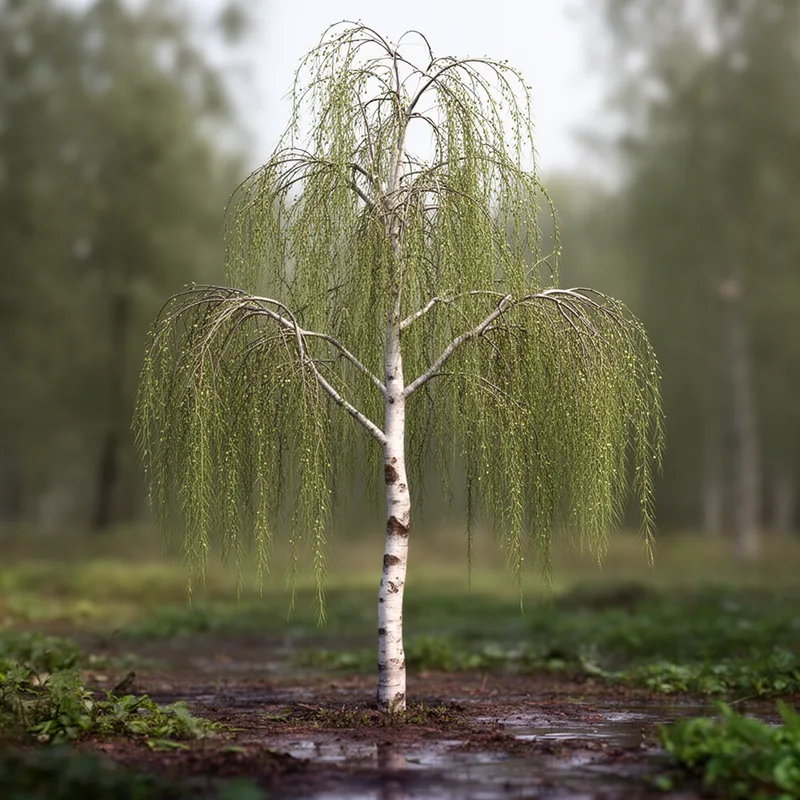
- Unlike the silver birch, Betula pubescens has more drooping and hairy branches.
Examples
-
The Betula pubescens features distinctive dull white bark and is often seen in northern Europe’s woodlands.
-
The Betula pubescens is commonly found in moist woodlands across northern Europe.
-
Gardeners often plant Betula pubescens for its tolerance to wet soils and ornamental value.
-
The Betula pubescens tree is commonly found in wet areas.
-
Have you ever seen a Betula pubescens in the wild?
-
Many gardeners appreciate Betula pubescens for its ability to thrive in wet, marshy areas.
-
Hikers can often spot Betula pubescens due to its unique, drooping branches and pale bark.
Synonyms

A tree with soft hairy young branches and dull white bark
Surface Forms
Morphology
Betula + pubescens
This is a Linnaean binomial combining the genus name 'Betula' (a birch) with the specific epithet 'pubescens' (literally ‘downy’/‘hairy’). If a learner knows both constituents, the meaning 'downy (or downy-hairy) birch' is directly derivable because scientific Latin names are compositional (genus + descriptive epithet) and function similarly across languages.
Etymology
Betula pubescens comes from Latin words: Betula means birch and pubescens means 'downy' or 'becoming hairy'. It refers to the tree's soft, hairy twigs and drooping branches, so the name points to the 'downy birch'.

