
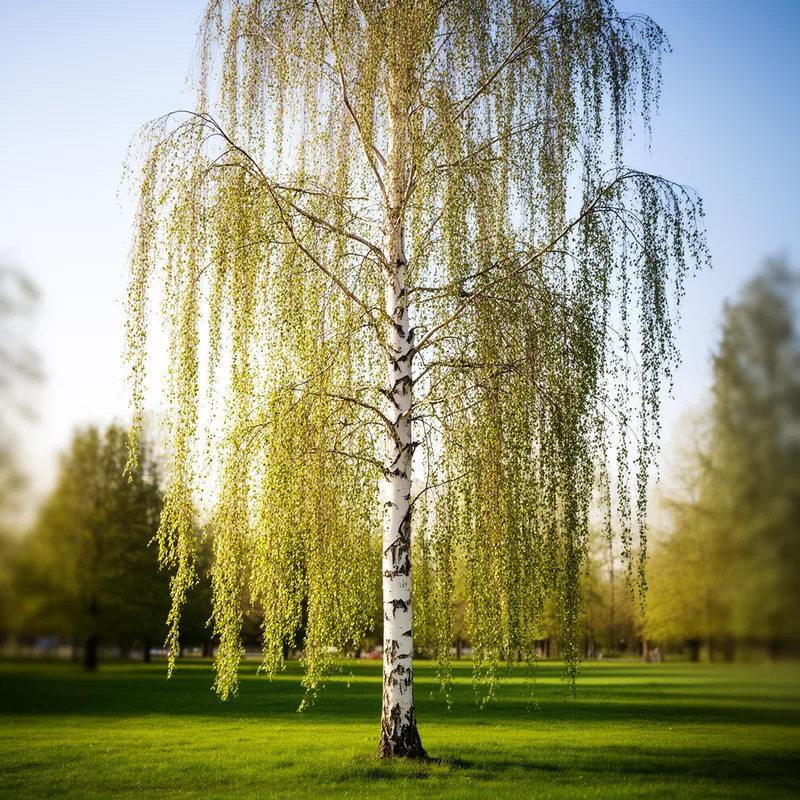
Betula pendula
- noun
- Specialized
- The Betula pendula is prized for its striking white bark and elegant silhouette in landscape gardens.
Examples
-
The drooping branches of the Betula pendula create a graceful canopy in the park.
-
Botanists planted several Betula pendula to restore the native woodland habitat.
-
The Betula pendula is often found in woodlands.
-
Many gardeners appreciate the Betula pendula for its beauty.
-
The Betula pendula is known for its elegant drooping branches and distinctive white bark.
-
In spring, the Betula pendula provides lovely shade with its gracefully arching branches.
-
Landscapers often choose the Betula pendula for its striking appearance and ability to thrive in various soils.
Synonyms

 1
4.9
1
4.9

A tree with pale bark and thin hanging branches often found in Europe

A tree with silvery white peeling bark and drooping branches
A tree with silvery white peeling bark and drooping branches
A tree with silvery white bark that peels in thin papery layers and drooping branches
Surface Forms
Morphology
Betula + pendula
The binomial is directly compositional: Betula denotes the birch genus and pendula is a descriptive epithet meaning 'hanging' or 'drooping', so the species name literally denotes a birch with drooping branches. Although 'pendula' is Latin and not common in everyday English, its relation to English forms like 'pendulous' and the cross-linguistic convention of descriptive Latin species epithets make the meaning predictable for learners who know the constituents.
Etymology
Betula pendula comes from Latin words: Betula means 'birch' and pendula means 'hanging' or 'drooping'. This gives a clear image of the tree's white, peeling bark and its long branches that hang down, so the name fits the tree we see today.