

Betula cordifolia
- noun
- Specialized
- Many indigenous people used Betula cordifolia bark to weave baskets and fashion small canoes.
Examples
-
The white bark of the Betula cordifolia peels easily, making it ideal for traditional crafts.
-
The forest was dotted with graceful Betula cordifolia trees shining in the sunlight.
-
The Betula cordifolia grows well in moist, well-drained soil.
-
Have you ever seen a Betula cordifolia in the wild?
-
Many indigenous people used Betula cordifolia bark to weave baskets and fashion small canoes.
-
The white bark of the Betula cordifolia peels easily, making it ideal for traditional crafts.
-
The Betula cordifolia tree's bark is commonly harvested for creating various handmade items.
Synonyms

A small North American tree with white bark that peels, used for baskets and toy canoes
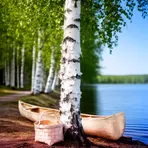
A North American tree with white, peeling bark used to make baskets and canoes

A North American birch tree with white bark that peels easily and people use to make crafts
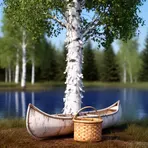
A small North American tree with white bark that peels and is used for canoes and baskets

A North American birch tree with white bark that peels and whose bark people use to make canoes and baskets
Surface Forms
Morphology
Betula + cordifolia
The first element 'Betula' directly identifies the genus (birch), so a learner who knows that would infer this is a type of birch. However the second element 'cordifolia' has no dictionary entry here and species epithets are Latin and encode specific biological traits that a B1 learner would not reliably interpret, so the full descriptive meaning (small North American birch with peeling white bark, uses, etc.) is not predictable from the parts.
Etymology
Betula cordifolia comes from Latin words that describe the tree: Betula means 'birch' and cordifolia means 'heart-shaped leaves'. The name shows its white, peeling bark and heart-shaped leaves, so it helps you remember this small birch often used for baskets and toy canoes.

