
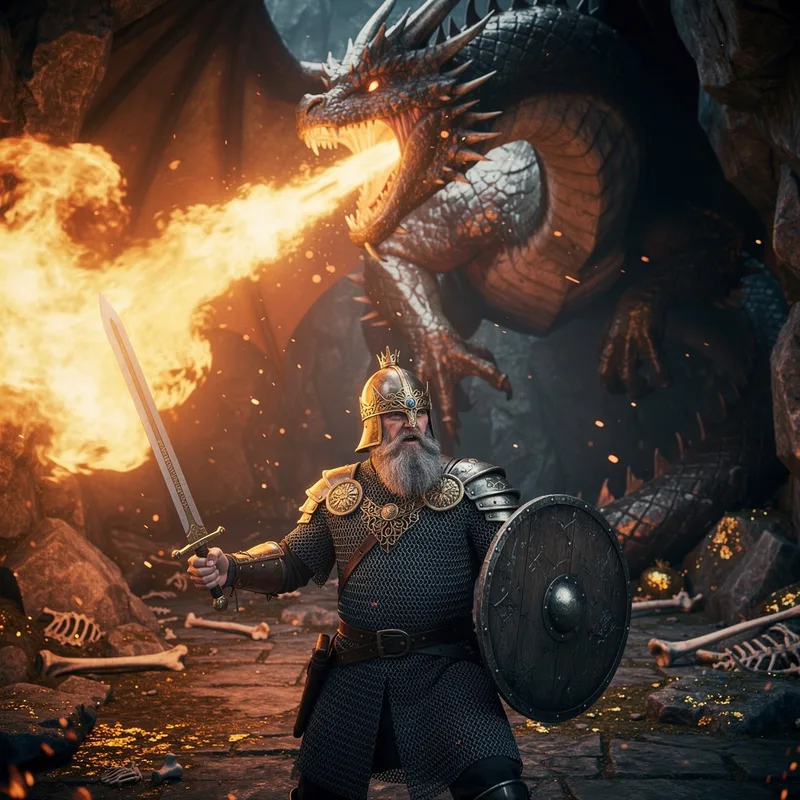
Beowulf
 22
9.9

- proper noun
- /ˈbeɪəˌwʊlf/
- Literature
- For a full discussion of the date, provenance, author, and audiences of Beowulf, see Bjork and Obermeier.
- author of Beowulf
- edition of Beowulf
- the Beowulf poet
Examples
-
I know that Grendel gets slayed by Beowulf and he's the hero.
-
When I am gone, Beowulf, son of Ecgtheow, shall be king!
-
I looked at him and said, "I am Beowulf!"
-
And she was to name the child... Beowulf.
-
Peter says I may have a shot at the English prize... if I read Beowulf properly.
-
Returning to the hall triumphant, Beowulf was hailed as the greatest hero in generations.
-
Drawing significantly on Bremmer, Tom Shippey uses Beowulf to illustrate certain strategies.
Academic text (2016) -
In the epic poem, Beowulf confronts the monster Grendel to protect the people of Heorot.
-
As a reward for his bravery, Beowulf is crowned king after defeating the dragon.
-
The legacy of Beowulf continues to inspire heroes in literature and beyond.
Surface Forms
Etymology
The name Beowulf probably comes from old name parts Beo- ('bee') and -wulf ('wolf'). A 'bee-wolf' was a poetic name for a bear, a very strong animal that raids beehives, so the name gives the hero a fierce, powerful image that fits his monster-fighting story.