
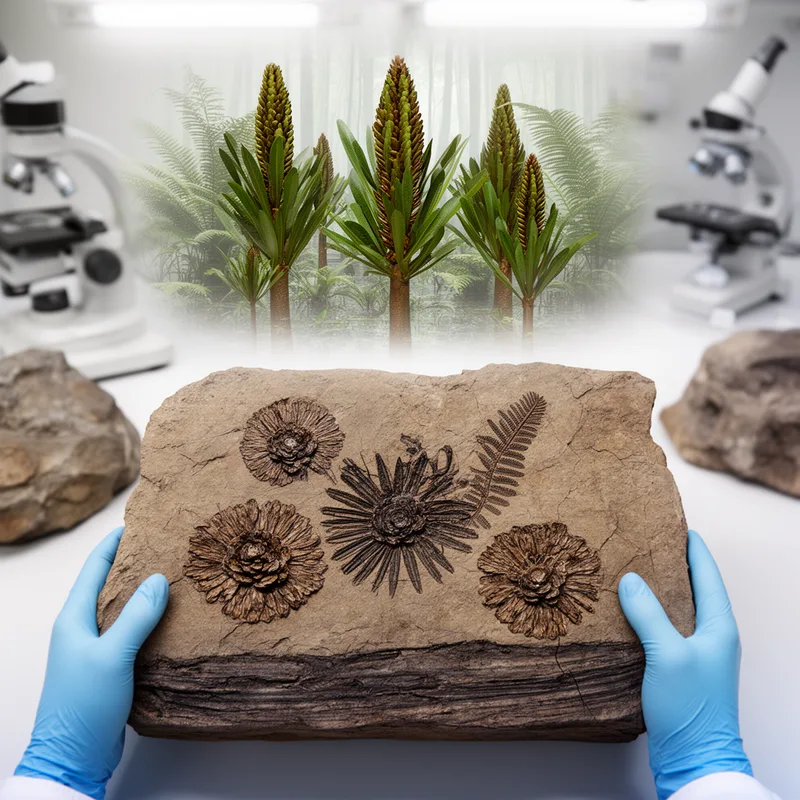
Bennettitaceae
- noun
- /ˌbɛnɪˈteɪʃiˌi/
- Specialized
- Fossils of the Bennettitaceae have been found in sedimentary rocks from the Carboniferous period.
Examples
-
Paleobotanists study members of the Bennettitaceae to learn about ancient plant life.
-
The Bennettitaceae are important for understanding the evolution of gymnosperms.
-
The Bennettitaceae family thrived during the Carboniferous period.
-
Many fossils of Bennettitaceae have been discovered in North America.
-
Fossils of the Bennettitaceae have been found in sedimentary rocks from the Carboniferous period.
-
Paleobotanists study members of the Bennettitaceae to understand ancient plant ecosystems.
-
The Bennettitaceae were a diverse group of seed plants that flourished millions of years ago.
Surface Forms
Morphology
Bennettitaceae = Bennettites (opaque) = Bennettit + aceae
The family name is regularly formed from the genus name with the taxonomic suffix '-aceae', but that suffix is specialized and not familiar to average learners.
Etymology
The word Bennettitaceae is a plant family name that comes from a scientist called Bennett, and the ending -aceae is the Latin part that means 'family' used in plant names like Rosaceae. So Bennettitaceae literally means the 'Bennett family' of plants, here the extinct group of seed plants known from fossils.

