
Bastille
 12
8.0
12
8.0

- proper noun
- /bæˈstiːl/
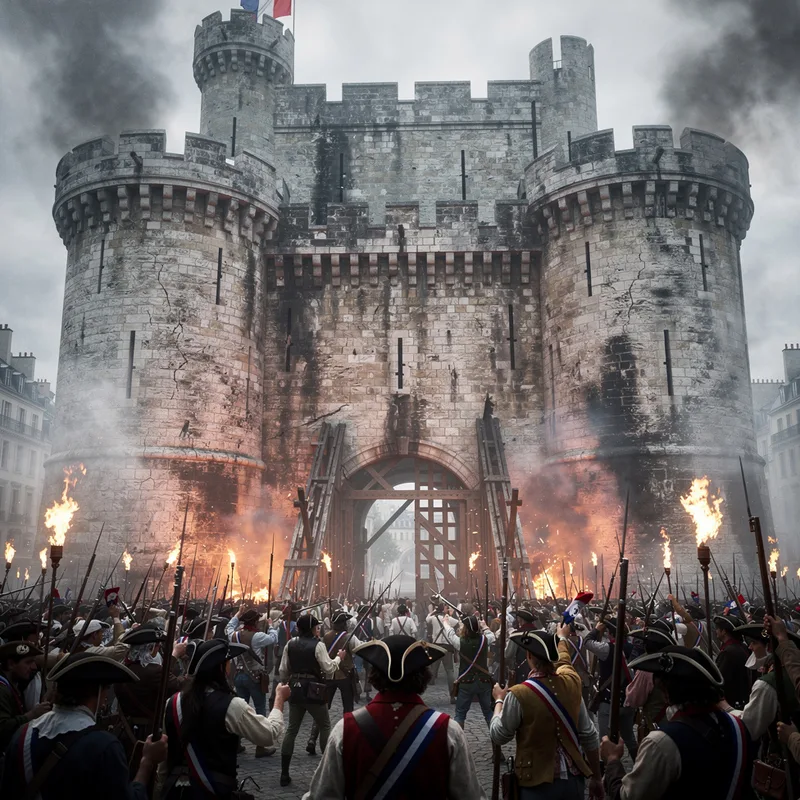
- The Bastille was stormed by revolutionaries on July 14, 1789, marking the start of the French Revolution.
- Bastille Day
- storming of the Bastille
- stormed the Bastille
Loading YouTube…
Watch on YouTubeInstead, it's first they storm the Bastille, and then they're like, OK, what next?
- Instead, it's first they storm the Bastille, and then they're like, OK, what next?
Examples
-
If Phillippe is in the Bastille, then to the Bastille we will go.
-
On Bastille Day, he stood on the village square wearing his medals.
Fiction book (2001) -
This royal prison, known as the Bastille, has become a place...
-
Is tomorrow really Bastille Day?
-
Do you want to go to the Bastille?
-
I'm going to the Bastille.
-
I told her I'm going to rent a room near the Bastille.
-
Instead, it's first they storm the Bastille, and then they're like, OK, what next?
-
Welcome to the Bastille.
-
Iraq's monarchy was overthrown on Bastille Day (July 14).
Academic text (2003)
Idioms
 1
9.1
1
9.1
To attack or strongly challenge a powerful organization, for example a government
Compounds
 5
2.9
5
2.9
A national holiday in France on July 14 that marks the storming of the Bastille in 1789
Surface Forms
Etymology
Bastille comes from French bastille, meaning a small 'fort' or 'strong building' from a root that meant 'to build', and is related to English bastion. The famous Paris Bastille was that kind of fortress turned prison, so its storming on July 14, 1789 became a powerful symbol of the French Revolution.