
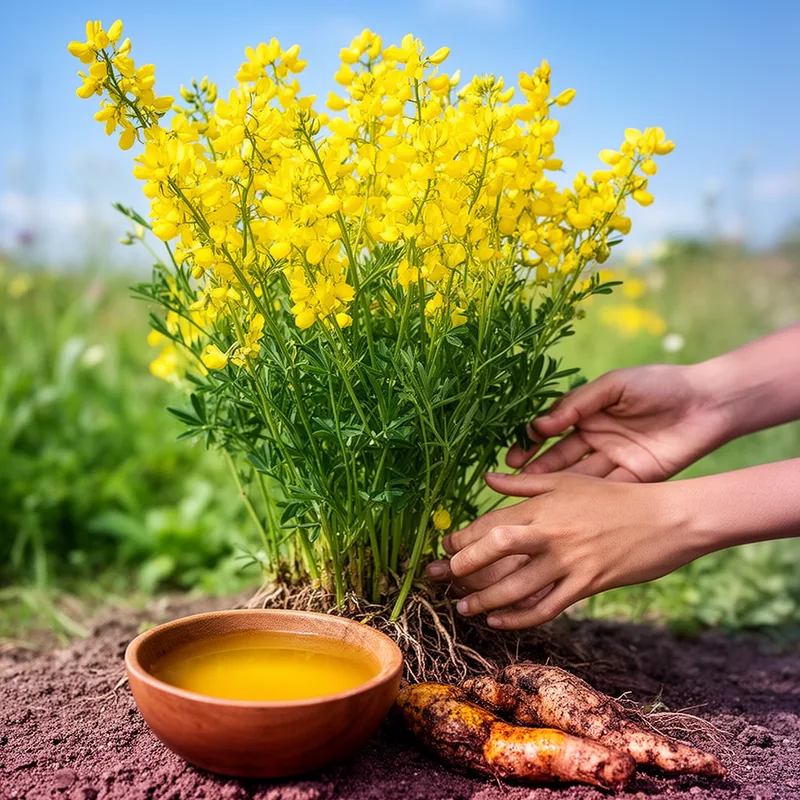
Baptisia tinctoria
- noun
- Specialized
- Gardeners often plant Baptisia tinctoria for its attractive clusters of yellow flowers.
Examples
-
The root of Baptisia tinctoria was once used to produce a natural dye.
-
Baptisia tinctoria is sometimes called wild indigo due to its dyeing properties.
-
Baptisia tinctoria blooms beautifully in the spring.
-
The Baptisia tinctoria plant can grow up to three feet tall.
-
Baptisia tinctoria is commonly used in landscaping because of its vibrant yellow flowers and ability to thrive in various soil types.
-
Many artisans appreciate Baptisia tinctoria for its historical use in creating natural dyes for textiles.
-
In traditional medicine, the roots of Baptisia tinctoria were utilized for their potential healing properties.
Synonyms

A bushy plant with many branches and bright yellow flowers

A plant with many branches and bright yellow flowers that grows in eastern North America
A plant with many branches and bright yellow flowers that grows in eastern North America
Surface Forms
Morphology
Baptisia + tinctoria
This is a Latin binomial (genus + specific epithet) used as a scientific plant name; although 'Baptisia' indicates a plant genus, the epithet 'tinctoria' is a Latinized term (here listed as not found) and would not be recognizable to a B1 learner, so the species-specific meaning (bright yellow, dye-producing) cannot be derived. Scientific names function as conventional labels rather than compositional English phrases, making the overall meaning unpredictable from the parts for an average learner.
Etymology
Baptisia tinctoria gets its name from its use as a dye plant: the second part tinctoria is Latin for 'used for dye', and the first word Baptisia comes from a word meaning 'to dip', like dipping cloth into dye. So the name reminds us that this yellow-flowered plant was once used to make natural dye.

