
Bacillus thuringiensis
 1
5.2
1
5.2

- noun
- /bəˈsɪləs θʊrɪnˈdʒiːənˌtɪs/
- Specialized
- The use of Bacillus thuringiensis is favored in organic farming because it targets specific pests without harming beneficial insects.
- Bacillus thuringiensis, a bacterium
- Bacillus thuringiensis toxins
- Bacillus thuringiensis (Bt)
Examples
-
Various Indianmeal moths are resistant to certain chemical insecticides and the biological control agent Bacillus thuringiensis.
Academic text (1995) -
Preparation of Bacillus thuringiensis spores
Academic text (2003) -
Another example is "Bt" technology, which involves plants producing a protein from Bacillus thuringiensis, a bacterium that is toxic to most insects.
Academic text (2012) -
Bt corn contains genes from the bacterium Bacillus thuringiensis so that the plant will produce proteins to protect itself against insect pests such as the European corn borer.
Academic text (2002) -
Application of the bacteria Bacillus thuringiensis and Bacillus sphaericus has been effective in reducing malaria in Nicaragua, China, and Cameroon (Sutherst 2004).
Academic text (2009) -
Rootworm corn has been genetically modified to produce a protein toxin derived from Bacillus thuringiensis (Bt), a common and naturally occurring soil bacterium.
Academic text (2003) -
Farmers often use Bacillus thuringiensis as a natural pesticide to protect their crops from harmful insects.
-
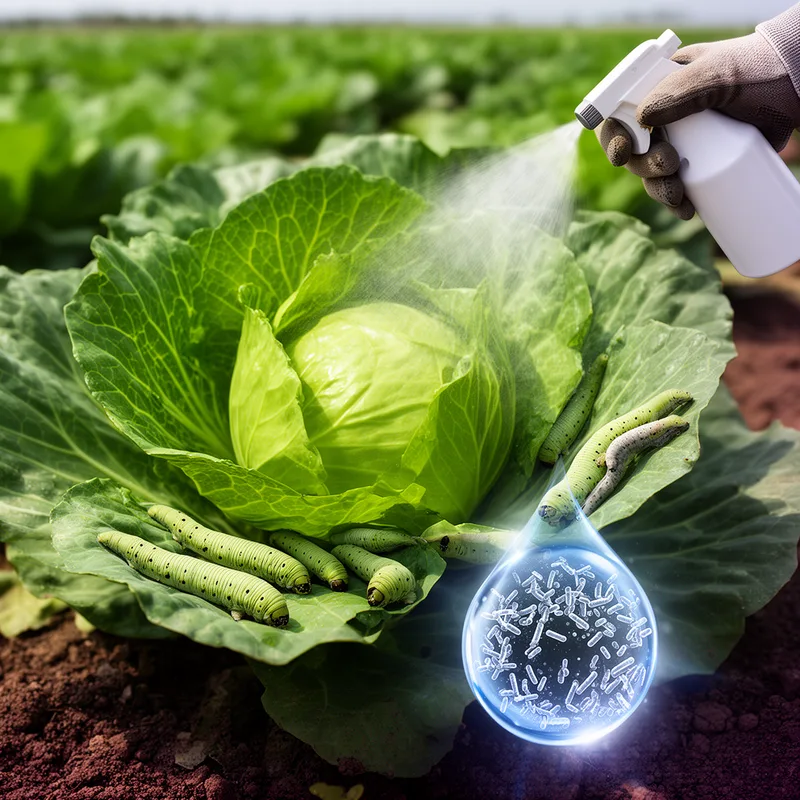
When the caterpillars were discovered on the plants, the gardener decided to spray them with Bacillus thuringiensis to prevent damage.
Synonyms

A natural product made from soil bacteria that kills insect pests on crops and plants
Surface Forms
Morphology
bacillus + thuringiensis
This is a Latin binomial: 'bacillus' denotes a rod-shaped bacterium, but 'thuringiensis' is a Latinized species epithet (derived from a place name) and does not convey the pesticidal function. A B1 learner who knows the constituent forms would not be able to infer the specific meaning 'a bacterium used as a natural pesticide' without specialist/domain knowledge, so the expression is opaque.
Etymology
Bacillus thuringiensis comes from the bacterium's shape and the place where it was first found. Bacillus means 'small rod' and thuringiensis points to 'Thuringia' in Germany, so the name helps you remember a rod-shaped bacterium from Thuringia that is used as a natural pesticide to kill caterpillars.