
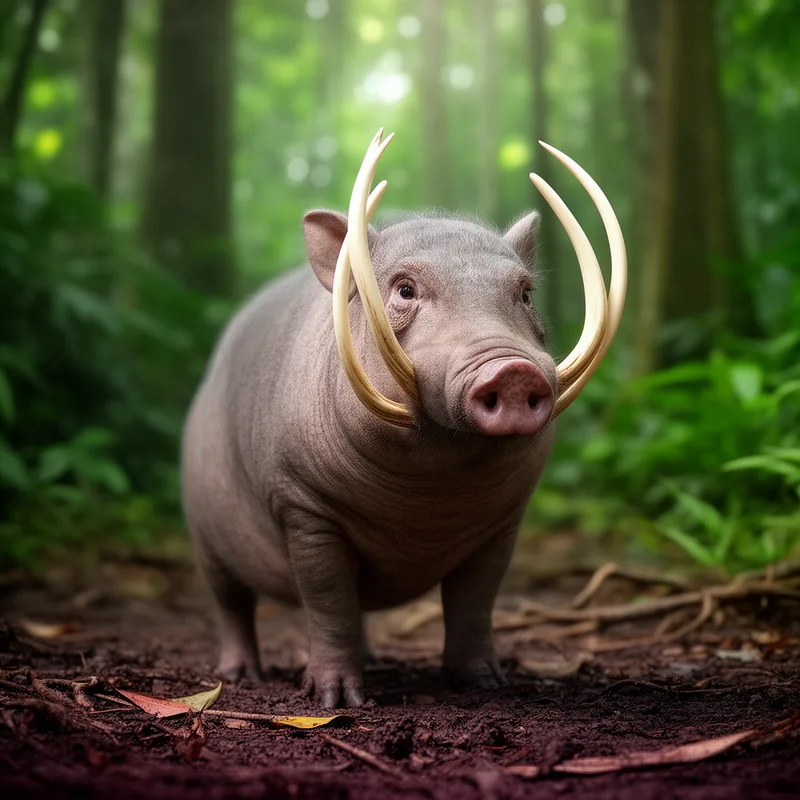
Babyrousa babyrussa
- noun
- Specialized
- The Babyrousa babyrussa is unique among pigs for its large, curved upper canine teeth.
Examples
-
The Babyrousa babyrussa is known for its distinctive upward-curving tusks.
-
Unlike other pigs, the Babyrousa babyrussa uses its tusks more for display than for fighting.
-
Researchers observed a herd of Babyrousa babyrussa in the Sulawesi forests.
-
The Babyrousa babyrussa is known for its distinctive tusks.
-
Many Babyrousa babyrussas live in the forests of Indonesia.
-
Researchers observed a herd of Babyrousa babyrussa in the lush forests of Sulawesi, Indonesia.
-
Unlike most other pigs, the Babyrousa babyrussa primarily uses its tusks for display rather than for aggression.
Synonyms


 1
9.9
A large wild pig from Indonesia with long tusks that grow upward through the snout
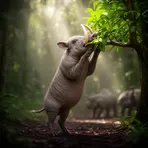
A wild pig from Indonesia with long tusks that curve upward
Surface Forms
Morphology
Babyrousa + babyrussa
This is a taxonomic binomial (scientific name) composed of proper-name elements rather than a compositional phrase; the meaning (a particular wild pig species) is referential and not built from ordinary English word senses. One element is not even a dictionary word and the genus name functions as a label, so a B1 learner who knows the constituents would not be able to derive the specific descriptive meaning.
Etymology
Babyrousa babyrussa comes from two Malay words, babi and rusa, meaning 'pig' and 'deer'. People called it that because its long, curved upper tusks look like deer antlers, so the name tells you 'pig-deer' and helps you remember this wild pig from Indonesia.