

BOLD fMRI
- noun
- /boʊld ɛfɛmˈɑːrˈaɪ/
- Specialized
- Researchers used BOLD fMRI to observe which brain regions were activated during the memory task.
Examples
-
Because BOLD fMRI detects changes in blood oxygen levels, it is sensitive to neuronal activity.
-
By analyzing BOLD fMRI data, researchers can pinpoint areas of the brain involved in decision-making.
-
The results from BOLD fMRI scans have advanced our understanding of cognitive functions.
-
The researchers used BOLD fMRI to study brain activity.
-
Can BOLD fMRI help us understand mental illnesses?
-
Scientists rely on BOLD fMRI to accurately measure brain activity during various tasks.
-
The use of BOLD fMRI has provided insights into how the brain processes visual information.
Synonyms

 8
3.6
8
3.6

A brain scan that shows activity by measuring blood flow with strong magnets
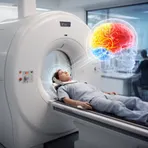 1
4.1
1
4.1
A way to see brain activity by measuring blood flow using a big machine with magnets
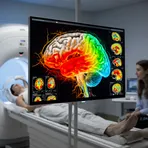
A brain scan that shows brain activity by measuring changes in blood oxygen
Surface Forms
Morphology
This is a technical acronym: BOLD stands for 'Blood Oxygenation Level Dependent' and is a specialized neuroimaging signal, not the common adjective/noun 'bold'. A B1 learner who knows 'bold' (typeface/strong) and 'fMRI' (brain imaging) would not be able to derive the specific meaning from the constituents, so the expression is not compositionally transparent.
Etymology
BOLD fMRI is named for what it measures: BOLD watches small changes in blood oxygen and fMRI is a brain scan. When a part of the brain works harder it uses more oxygen, so the scan shows which parts are 'active' and reveals 'brain activity'.