

Axis
 8
6.3

- proper noun
- /ˈæksɪs/
- The Axis powers, known for their aggressive expansion, were ultimately defeated in 1945.
- Axis powers
- Axis Powers
- defeat of the Axis
Loading YouTube…
Watch on YouTubeAnd you talked earlier about an Axis and Allies coming back to the new Cold War.
- And you talked earlier about an Axis and Allies coming back to the new Cold War.
- So it was after D-Day and it looked like the Allies were encroaching on the Axis forces.
- In this video, we will explain why the Treaty of Versailles became the straw that broke the camel's back, pushing Japan towards the Axis.
Examples
-
One may argue about the degree of his cooperation with the Axis powers, but his sympathies were clear.
Academic text (1996) -
Switzerland is entirely surrounded by the Axis powers.
-
The Axis forces in the Western desert-
-
Italy was never part of the Axis.
-
Meanwhile, overseas, our brave boys are showing the Axis powers that the price of freedom is never too high.
-
Twenty days later, four days after Pearl Harbor, the United States was at war with all the Axis Powers.
Fiction book (2002) -
Most Americans conceived the war against European Axis powers as a struggle against Nazism and Fascism.
Academic text (2010) -
During World War II, an estimated 300 million anti-tank and anti-personnel mines were laid by the Axis and Allied powers combined.
Academic text (1996) -
During World War II, the Axis formed a coalition of Germany, Italy, and Japan to oppose the Allies.
-
Many historical accounts detail how the Axis nations collaborated in their military strategies.
Compounds



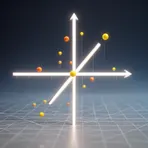
- Specialized

 1
4.4
A fixed straight line that shows where points are on a graph, like the x or y line

- Specialized
1
6.3
The longest straight line through an ellipse that passes through its two special inner points

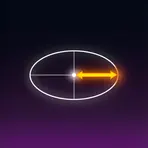
- Specialized
1
8.0
The distance from the center of an ellipse or oval to its farthest edge, equal to half the longest diameter

- Specialized
1
7.7
An invisible straight line through a lens or mirror center that light follows without bending
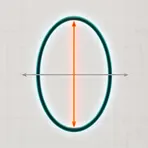
- Specialized
1
7.2
The shorter diameter of an ellipse that goes through its center and meets the longer axis at right angles

- Specialized
1
8.7
Half the length from the center to the edge along an ellipse's shortest diameter

- Specialized
1
9.3
A telescope with a tilted main mirror that sends the image to the side to avoid mirror blocking light


Surface Forms
Etymology
Axis comes from the Latin axis, meaning 'axle' or 'pivot' — like the bar a wheel turns on. The name was used in the 1930s for the Germany-Italy link and later for their partners in World War II, because it suggested countries lined up or turning together around the same 'centre'.