
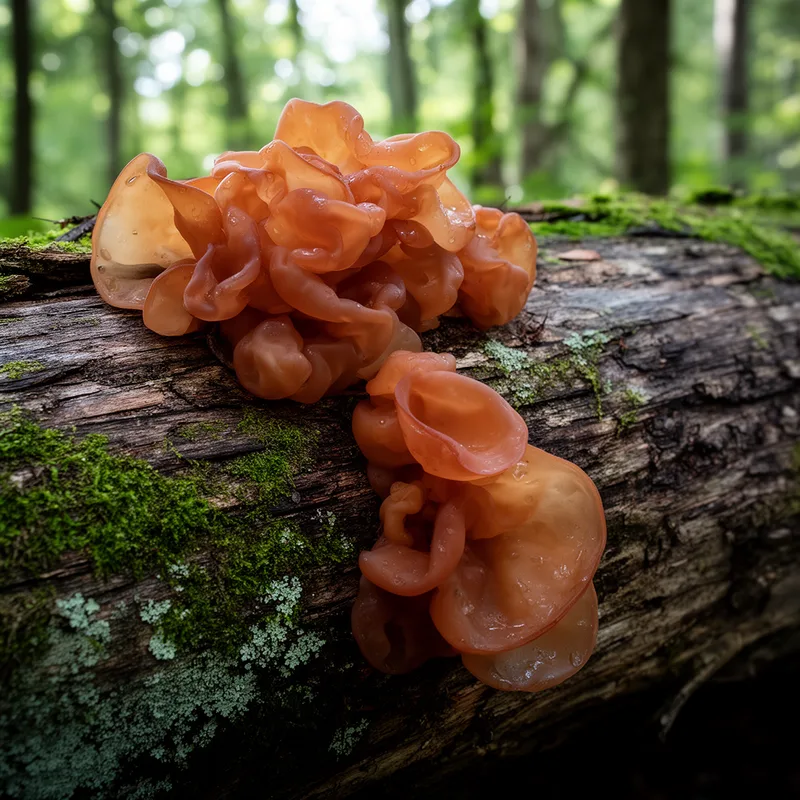
Auriculariaceae
- noun
- /ɔːˌrɪkjʊˈlɛəriˌeɪsiː/
- Specialized
- The wood ear mushroom, a popular edible fungus, belongs to the Auriculariaceae family.
Examples
-
Members of the Auriculariaceae are known for their jelly-like fruiting bodies that grow on wood.
-
The wood ear mushroom, known for its gelatinous texture, is a member of the Auriculariaceae family.
-
Researchers studied the ecological roles of Auriculariaceae species in forest environments.
-
The Auriculariaceae family includes various species of jelly fungi.
-
Are Auriculariaceae fungi commonly found in wet environments?
-
The Auriculariaceae family includes various species of jelly fungi that are often found on decaying wood.
-
Researchers studied the ecological roles of Auriculariaceae species, which play a key role in nutrient recycling in forest ecosystems.
Synonyms
A group of jelly mushrooms that grow on wood, like wood ear
A group of fungi that includes jelly-like species often on dead wood
A group of related mushrooms that includes jelly-like types such as wood ear
Compounds
Surface Forms
Morphology
Auriculariaceae = Auricularia (opaque) = auriculari + aceae
The family name is formed by adding the specialized Latin taxonomic suffix '-aceae' to a genus stem; this construction is unlikely to be interpretable by an average B1 learner without biological knowledge.
Etymology
Auriculariaceae comes from the Latin auricula, meaning 'little ear', because many of these fungi have ear-shaped, jelly-like parts that grow on wood like the common 'wood ear' mushroom. The ending -aceae means 'family' in scientific names, so Auriculariaceae is the 'ear family' of fungi.

