
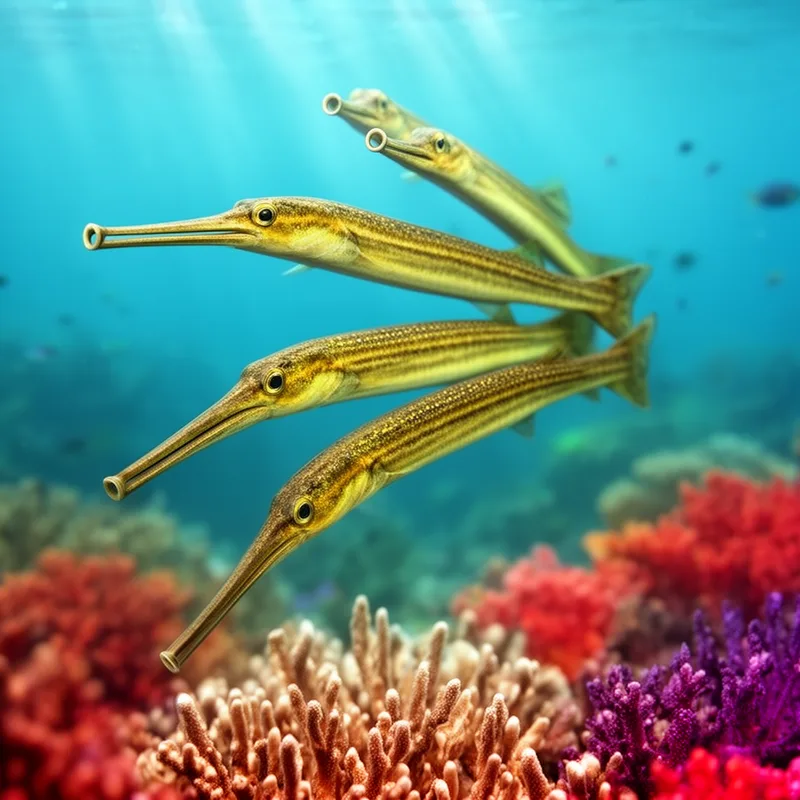
Aulostomidae
- noun
- /ˌɔːloʊˈstoʊmɪdi/
- Specialized
- The family Aulostomidae consists of species commonly known as trumpetfishes.
Examples
-
Scientists studied the distinct feeding habits of the Aulostomidae during the coral reef survey.
-
The Aulostomidae family is recognized for its unique long tubular snouts.
-
Members of Aulostomidae are found in tropical and subtropical marine environments worldwide.
-
The Aulostomidae family includes various species of trumpetfishes.
-
Did you know that Aulostomidae can grow up to 1.2 meters long?
-
The family Aulostomidae consists of elongated marine fishes known as trumpetfishes.
-
Members of Aulostomidae inhabit tropical and subtropical waters around the world.
Surface Forms
Morphology
Aulostomidae = Aulostomus (opaque) = Aulostomus + idae
Formed from a genus name plus the specialized taxonomic suffix '-idae'; this is a technical morphological process unfamiliar to average learners.
Etymology
Aulostomidae comes from Greek parts aulos ('pipe' or 'flute') and stoma ('mouth'), meaning 'pipe-mouth'. So these fish are called trumpetfishes because they have long, tube-like snouts that look like a pipe or trumpet.

