
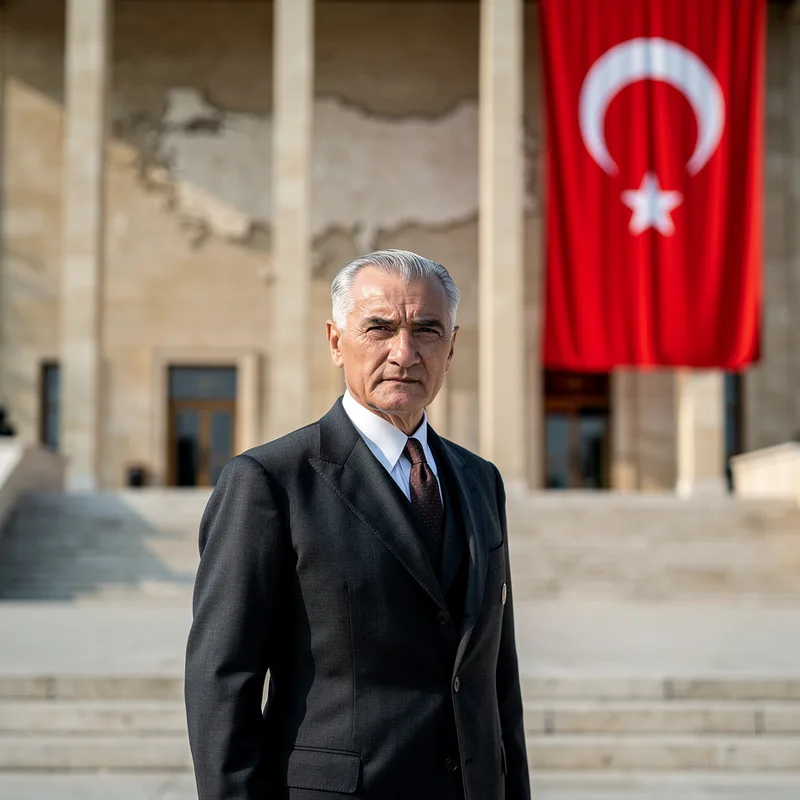
Ataturk
 2
6.3

- proper noun
- /ˈɑːtəˌtɜrk/
- In 1920, Ataturk led a revolution that changed Turkey from a monarchy ruled by sultans into a democratic republic.
- Ataturk Kemal
- Mustafa Kemal Ataturk
- Ataturk's Turkey
Examples
-
In foreign policy, the principle formulated by Ataturk—"Peace at home, peace abroad"—became the cornerstone of Turkey's conduct in external relations.
Academic text (2000) -
Perhaps the Arabs should heed the advice of Mustafa Kemal Ataturk to his people: "change or perish."
Academic text (2004) -
The main drive for Ataturk was the westernization of the newly established Turkey.
Academic text (1996) -
The granting of political rights to women, encouraged by Ataturk, was achieved before the 1930s.
Academic text (2008) -
If granted, EU membership would fulfill Ataturk's ultimate hope for a strong, united, and democratic Turkey joined with the West.
Academic text (2004) -
The military continues to consider itself the guardian of the state, established and maintained according to Ataturk's Republican and secularist principles.
Academic text (2000) -
Mustafa Kemal Ataturk is celebrated for founding the modern Turkish Republic in 1923.
-
The reforms introduced by Ataturk transformed Turkey into a secular and progressive nation.
-
In schools across Turkey, Ataturk's legacy is taught to inspire future generations.
Synonyms
 2
7.3
The founder and first president of modern Turkey who made it a secular state

 1
5.7
Founder and first president of modern Turkey who made government separate from religion
Turkish leader who founded modern secular Turkey
Surface Forms
Etymology
Ataturk comes from Turkish parts Ata meaning 'father' and Türk meaning 'Turk'. It was the surname given to Mustafa Kemal, so Ataturk means 'Father of the Turks' and shows his role as the founder and leader of modern Turkey.