
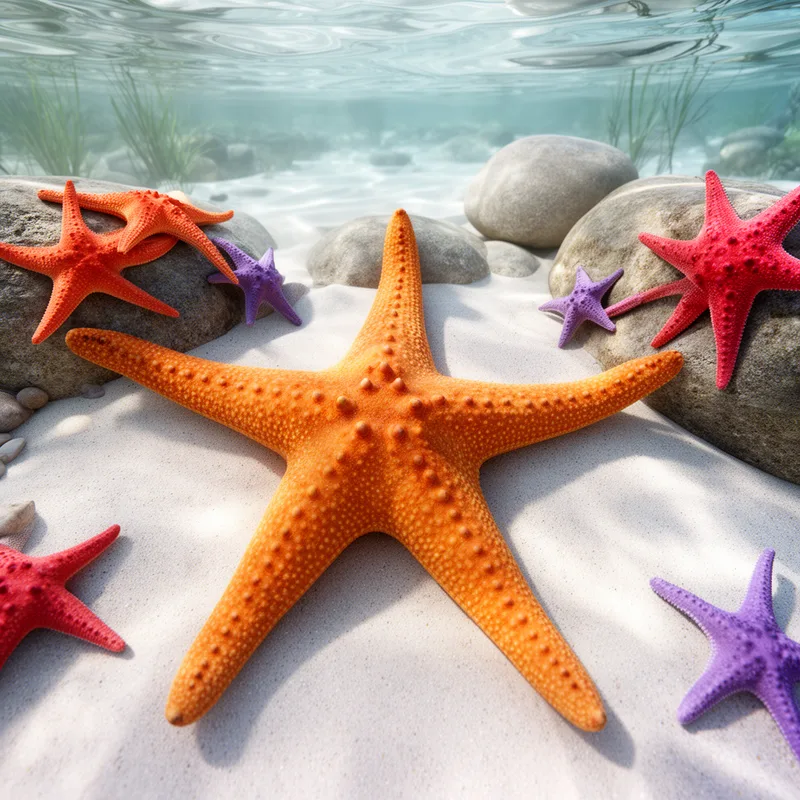
Asteroidea


 1
9.9
- noun
- /ˌæstəˈrɔɪdiə/
- Specialized
- Scientists collected several Asteroidea specimens from the rocky tide pools for their study.
Examples
-
The Asteroidea are fascinating creatures found in oceans.
-
The aquarium's new exhibit features a variety of Asteroidea from different ocean habitats.
-
Members of the Asteroidea class are easily recognized by their star-shaped bodies.
-
Did you know that Asteroidea can regenerate their arms?
-
The Asteroidea, commonly known as sea stars, can often be seen clinging to rocks in tide pools.
-
Marine biologists study the Asteroidea to understand their role in ocean ecosystems.
-
The Asteroidea species have five arms that enable them to move gracefully across the sea floor.
Surface Forms
Morphology
Etymology
The word Asteroidea comes from the Greek root aster meaning 'star' and the part -oidea meaning 'shape', like the small star symbol asterisk. So Asteroidea are sea animals with a 'star' shape, which is why they include the sea stars or starfish.