
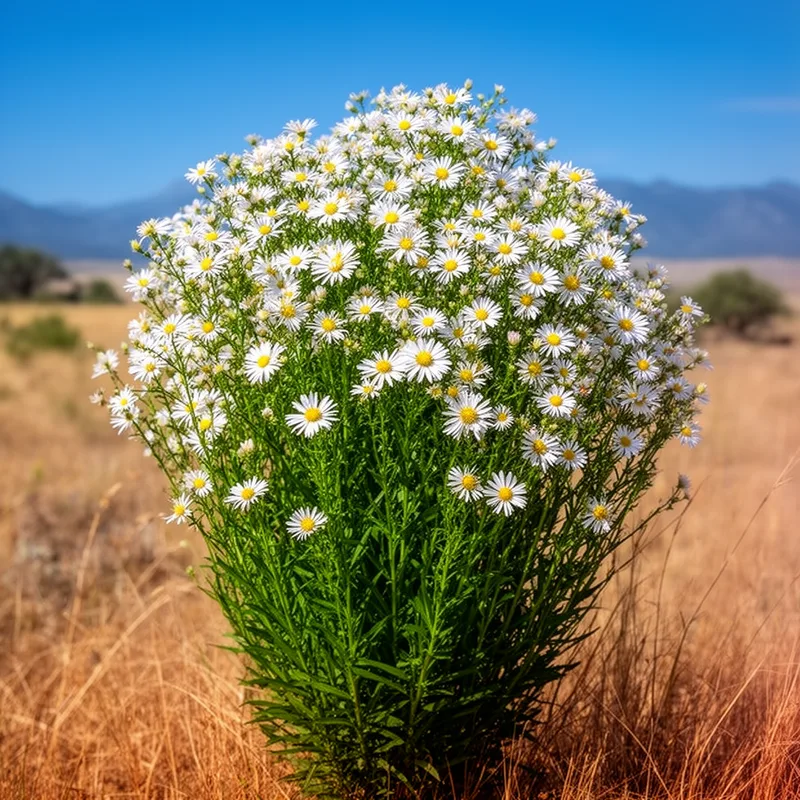
Aster falcatus
- noun
- Specialized
- Gardeners appreciate Aster falcatus for its resilience and attractive white blossoms.
Examples
-
Aster falcatus blooms in late spring and is often found in prairies and open woodlands.
-
The Aster falcatus blooms beautifully in spring.
-
Aster falcatus can add diversity to native plant gardens in western regions.
-
Have you seen the Aster falcatus in the garden?
-
Aster falcatus blooms in late spring and is often found in prairies and open woodlands.
-
Aster falcatus can add diversity to native plant gardens in western regions.
-
Gardeners appreciate Aster falcatus for its resilience and attractive white blossoms.
Synonyms
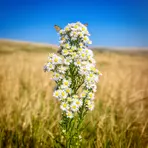
A plant with small white flowers that grows in open grasslands
Surface Forms
Morphology
aster + falcatus
Although 'aster' is a familiar English noun for a flower, 'falcatus' is a Latin-form element not found in an ordinary English dictionary, so a B1 learner who knows the constituent words would not be able to infer the species-level meaning. Botanical binomials are lexicalized scientific names and typically require specialized or Latin knowledge, so the overall meaning is not transparently derivable from the parts.
Etymology
Aster falcatus comes from old Latin words: aster means 'star' because the flower looks like a small star, and falcatus means 'sickle-shaped' for its curved leaves. So the name helps you picture a white, star-like flower with curved leaves, which is why it fits this plant.

