
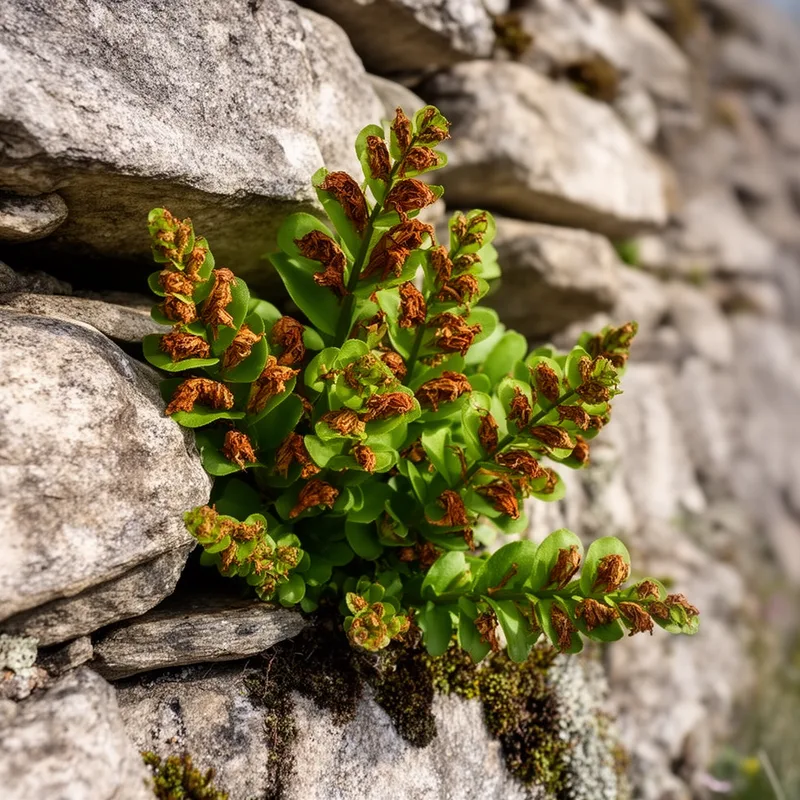
Asplenium ceterach
- noun
- UK
- Botanists identified the fern as Asplenium ceterach due to its rusty-colored scales.
Examples
-
The dry stone walls were covered in Asplenium ceterach thriving in the cracks.
-
In southern Europe, Asplenium ceterach is a common sight on rocky slopes.
-
The Asplenium ceterach thrives in rocky areas.
-
I found an Asplenium ceterach growing in my garden.
-
In southern Europe, Asplenium ceterach is often found growing on rocky cliffs.
-
The dry stone walls were adorned with Asplenium ceterach, showcasing its leathery fronds.
-
I discovered an Asplenium ceterach fern in the crevice of an old wall.
Synonyms
A small green plant with scaly, leather-like leaves that grows in rocky places

A small European fern with leathery leaves covered in dry brown flakes

A small European fern with tough, leathery leaves that grows on rocks
Surface Forms
Morphology
Both constituent words are botanical genus names referring to types of ferns, so together they function compositionally as a scientific binomial naming a specific fern species. The meaning (‘a particular fern’) is directly derivable from knowing the parts and from the cross-linguistically common convention of Latin binomial names, so a learner who knows the constituents would understand the MWE.
Etymology
Asplenium ceterach is the scientific name for a small European fern often called rustyback. The fern has rusty-brown scales on the underside of its leaves, so the picture of a 'rusty back' helps explain why people use that name for this little fern.

