
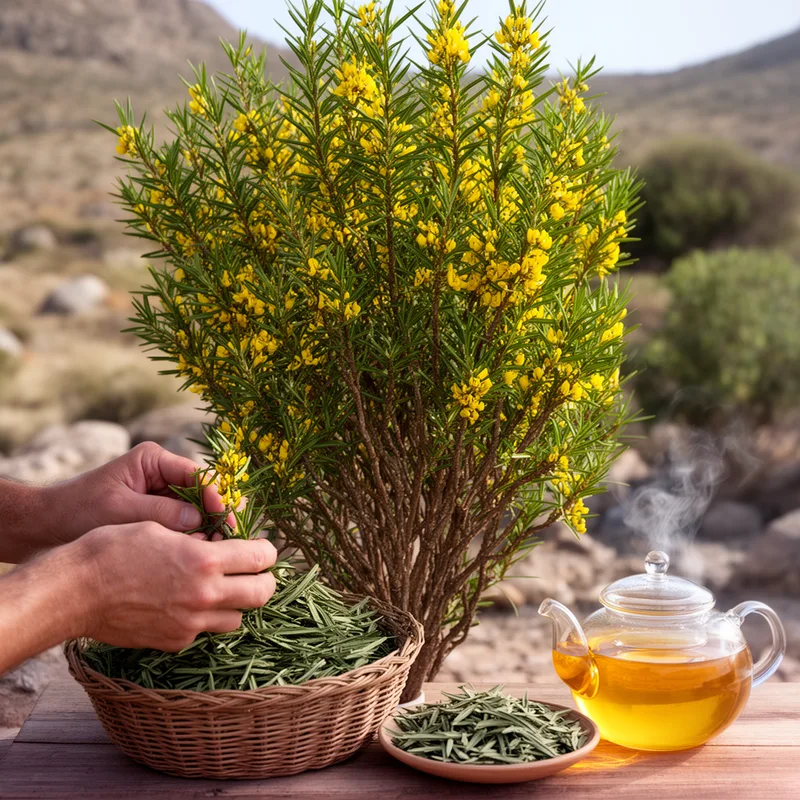
Aspalathus cedcarbergensis
- noun
- Specialized
- The leaves of Aspalathus cedcarbergensis are harvested and dried to brew a distinctive herbal tea.
Examples
-
I enjoy drinking Aspalathus cedcarbergensis tea every morning.
-
Aspalathus cedcarbergensis is well-known for its bright yellow flowers and aromatic, acuminate leaves.
-
Researchers are studying the medicinal properties of Aspalathus cedcarbergensis in South Africa.
-
The Aspalathus cedcarbergensis plant thrives in rocky soil.
-
The leaves of Aspalathus cedcarbergensis are harvested and dried to brew a distinctive herbal tea.
-
I enjoy drinking Aspalathus cedcarbergensis tea every morning.
-
Researchers are studying the medicinal properties of Aspalathus cedcarbergensis in South Africa.
Surface Forms
Morphology
Aspalathus + cedcarbergensis
This is a scientific binomial Latin name: while the genus 'Aspalathus' signals a group of South African shrubs, the species epithet 'cedcarbergensis' is a non-standard, non-lexicalized form that does not convey the plant's properties or its use. A B1 learner who knows the constituent strings would at best infer 'a kind of shrub' but would not be able to derive the specific meaning (aromatic leaves used for tea), so the expression is opaque.
Etymology
Aspalathus cedcarbergensis may come from its plant group and the place it grows. The first part, Aspalathus, is the group of small shrubs whose leaves are used to make herbal tea, and the second part, cedcarbergensis, points to the 'Cederberg' area in South Africa where it is found. So the name helps you remember it is a yellow-flowered, tea-making shrub from the Cederberg.

