
Ashtoreth


 1
9.9
- proper noun
- Literature
- The women began to embrace each other, and the woman on the ground stood up and raised a banner which read, "Remember the ones who followed Ashtoreth."
Examples
-
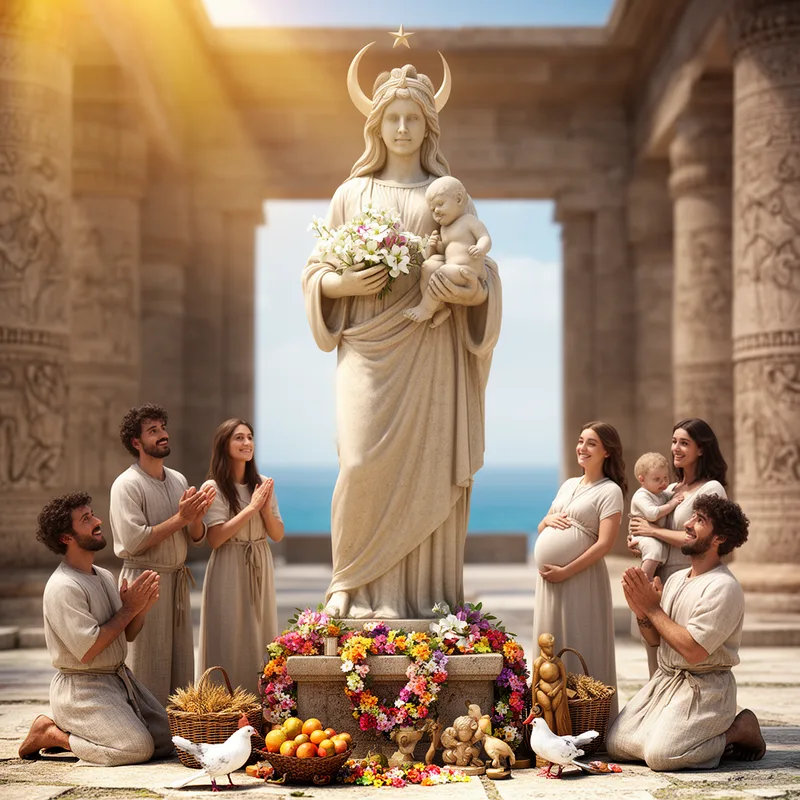
In ancient times, people offered sacrifices to Ashtoreth as a symbol of love and fertility.
-
Ashtoreth Eldritch left a pleasant surprise comment on one of my previous posts, letting me know that she'd given me The Witchy Blog award.
Blog text (21) -
Is the great goddess Ashtoreth... ...answering your prayers?
-
Then they marched as a group to the temple of Ashtoreth, the mother goddess.
Fiction book (1994) -
Hebrews have been worshipping the goddess Ashtoreth for generations!
-
Fearing that Ashtoreth would observe, he masked himself by assuming the form of his other nature, that of the bull, and approached Helen.
Fiction book (1994) -
She still worshiped idols and burned incense to Ashtoreth.
Fiction book (2001) -
Many statues of Ashtoreth were found in archaeological sites, showcasing her importance in Phoenician culture.
-
The festival dedicated to Ashtoreth included dances and rituals to celebrate the goddess of love.
Synonyms
 2
9.9
A goddess of love, birth and war in ancient Mesopotamia
 2
9.9
A goddess of love and fertility worshipped by the ancient Phoenicians
Surface Forms
Etymology
Ashtoreth is the English form of an ancient Phoenician goddess name, like Astarte and Ishtar, who were worshipped as goddesses of 'love' and 'fertility'. So Ashtoreth refers to that ancient deity and keeps the idea of 'love' and 'bringing life'.