
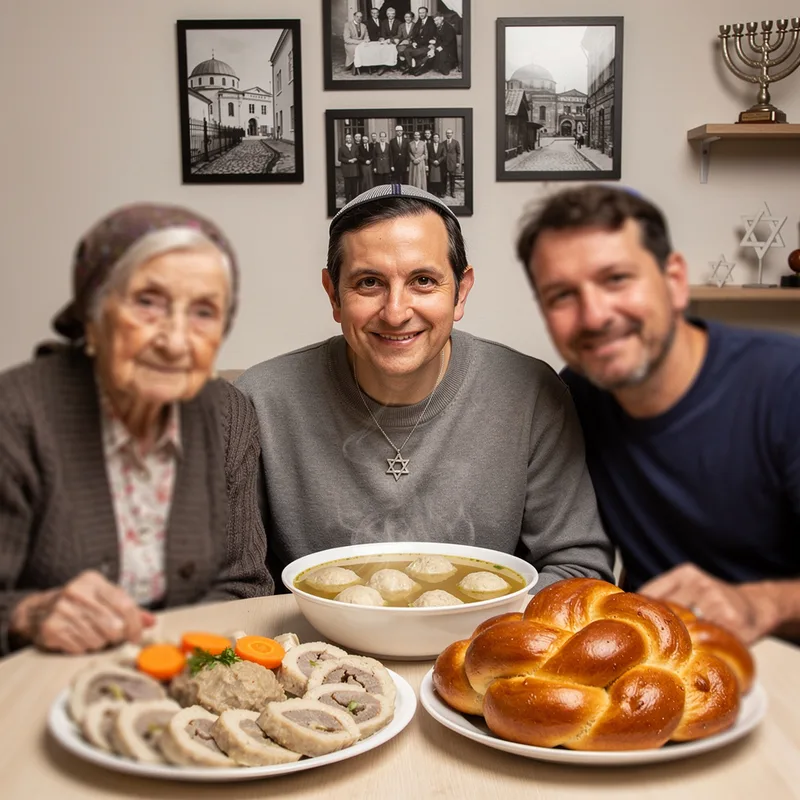
Ashkenazi
 6
7.7

- noun
- /ˌɑʃkəˈnɑzi/
- Another social rift, the Ashkenazi-Sephardi cleavage, has also become much less divisive than in the past.
- Ashkenazi Jewish
- Ashkenazi Jews
- Ashkenazi population
Loading YouTube…
Watch on YouTubeAnd if again I what the papers say, the main problem was you were opposed by most of your own government, including Ashkenazi, the.
- And if again I what the papers say, the main problem was you were opposed by most of your own government, including Ashkenazi, the.
Examples
-
I had minimal ancestry testing done, which told me I was Ashkenazi from Russia, which I already knew.
Blog text (31) -
Eight underrepresented alleles in Ashkenazi Jewish patients have been observed.
Academic text (2007) -
So I'm talking about Ashkenazi Jews from Eastern Europe.
-
For example, they are found in up to 85% of patients of Ashkenazi Jewish descent.
Academic text (2001) -
Neither the Moroccan who is too harsh nor the Ashkenazi who is too soft is considered honorable.
Academic text (1990) -
The main cleavages are ethnic (Sephardi-Ashkenazi) and the degrees of religiosity.
Academic text (1996) -
The IDF is also a great leveler, as seen here, as young women soldiers of Ashkenazi, Sephardi, and Ethiopian backgrounds mix easily.
Academic text (2013) -
Many genetic diseases are more prevalent among Ashkenazi Jews due to their unique ancestry.
-
The film explores the history and culture of Ashkenazi Jews in Eastern Europe.
-
Ashkenazi Jews often celebrate traditions that reflect their cultural heritage from Germany and Poland.
Synonyms
 ∞
2.4
A person who follows the religion Judaism or has Jewish ancestors
Surface Forms
Etymology
The word Ashkenazi comes from the Hebrew place name Ashkenaz, which older Hebrew writers used for 'Germany'. So Ashkenazi refers to Jews whose ancestors came from Germany and later from central and eastern Europe.