

Aristolochia serpentaria
- noun
- Specialized
- Botanists often identify Aristolochia serpentaria by its distinctive heart-shaped leaves and slender stem.
Examples
-
Aristolochia serpentaria thrives in rich woodlands across the eastern United States.
-
The Aristolochia serpentaria is often found in moist woodland areas.
-
Early herbalists valued Aristolochia serpentaria for its supposed medicinal properties, especially against snakebites.
-
Many herbalists use Aristolochia serpentaria for its medicinal properties.
-
Aristolochia serpentaria is commonly used in herbal medicine for treating snakebites.
-
In the wild, Aristolochia serpentaria can be spotted near streams in shaded areas.
-
Known for its unique appearance, Aristolochia serpentaria has heart-shaped leaves that botanists admire.
Synonyms

A woodland herb from North America with heart-shaped leaves and small brown flowers once used as medicine

A plant that grows in eastern United States woods with thin, curved roots once used in herbal medicine
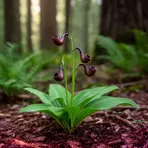
A woodland plant with pipe-shaped flowers that grows in the eastern United States
Surface Forms
Morphology
Aristolochia + serpentaria
This is a Latin botanical binomial: the genus name 'Aristolochia' is a specialized taxonomic label and 'serpentaria' is opaque in the provided data but likely derives from Latin serpent- (‘snake’), which could hint at a common name like 'snakeroot'. Because the genus name is technical and the species element only partly cues meaning, a learner who knows the parts would get a vague idea (snake-related plant) but not the specific botanical sense without extra knowledge.
Etymology
Aristolochia serpentaria gets its name from the second word serpentaria, which points to snakes. One popular story says herbalists thought the root looked like a small snake and used the plant to treat 'snakebites'. That's why it is also called 'Virginia snakeroot' and why the name links the plant to snakes.

