

Arisaema triphyllum
- noun
- /ˌærɪˈseɪmə traɪˈfɪləm/
- Specialized
- Many hikers find Arisaema triphyllum growing in shaded, moist forests across eastern North America.
Examples
-
The bright red berries of Arisaema triphyllum appear in late summer after the flowering season.
-
Native bees are attracted to the distinctive flowers of Arisaema triphyllum each spring.
-
The Arisaema triphyllum blooms beautifully in the spring.
-
Look at that Arisaema triphyllum!
-
Hikers often come across Arisaema triphyllum thriving in the damp, shaded areas of eastern North American forests.
-
In early spring, Arisaema triphyllum displays unique flowers that attract various native bees.
-
By late summer, Arisaema triphyllum produces bright red berries that add color to the woodland landscape.
Synonyms


 1
9.9
1
9.9
A woodland plant with a hooded green or purple flower and red berries
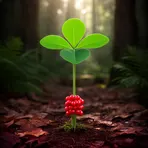
A North American woodland plant with leaves that have three parts and bright red berries
Surface Forms
Morphology
Arisaema + triphyllum
This is a taxonomic Latin binomial (genus + species) rather than a ordinary English compositional phrase; the listed constituents are either technical (a genus name) or not found as English words ('triphyllum'), so a B1 learner cannot derive the plant identity or description from them. Because the meaning (a specific woodland plant, Jack-in-the-pulpit) is technical and language-specific, it is not predictable from the parts and is therefore opaque.
Etymology
Arisaema triphyllum points to how the plant looks: triphyllum means 'three leaves' because the plant usually has a leaf with three parts. The hooded flower hides a small central stalk like a little 'Jack' standing in a 'pulpit', so people call it 'Jack-in-the-pulpit' today.