
Arctium minus
- noun
- Specialized
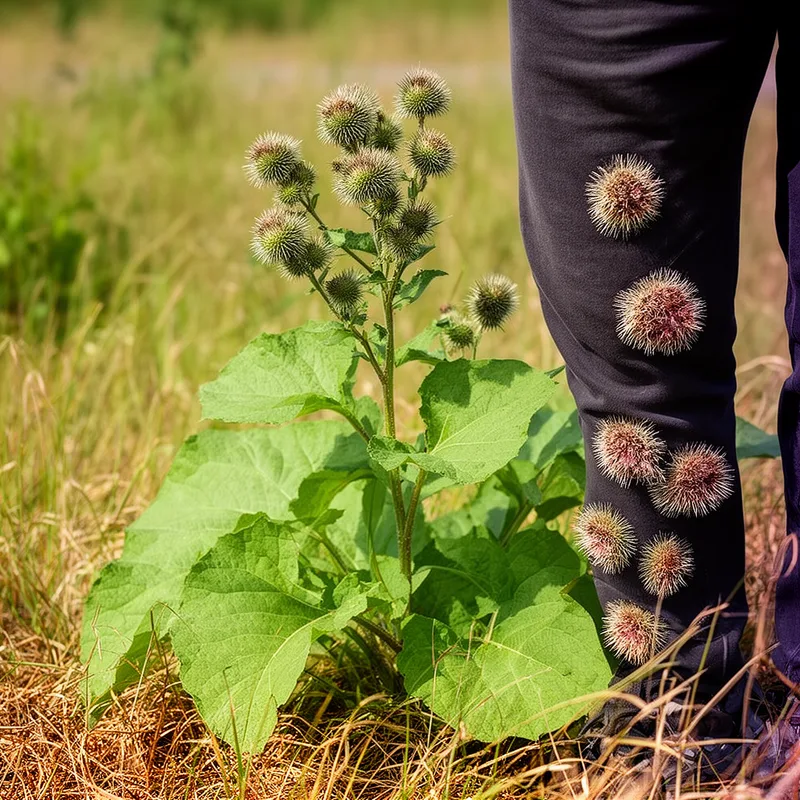
- The broad leaves of Arctium minus make it easy to identify among other wild plants.
Examples
-
Arctium minus is often found in disturbed areas, like along roads and in fields across Europe.
-
The Arctium minus plant thrives in various soil types.
-
Arctium minus thrives in fields and roadsides throughout much of Europe.
-
Many herbalists use Arctium minus for traditional remedies.
-
I spotted an Arctium minus while hiking in the countryside.
-
Herbalists value Arctium minus for its use in natural medicine remedies in many cultures.
-
The large, heart-shaped leaves of Arctium minus help distinguish it from other plants in the wild.
Synonyms

A large wild plant with broad leaves and seed burrs that stick to animal fur

A common wild plant with large rough leaves and purple flower heads
Surface Forms
Morphology
Arctium + minus
The form is a Latin binomial combining the genus name Arctium (burdock) with the epithet 'minus', so a learner who knows Arctium as the burdock genus and interprets 'minus' as a distinguishing label could infer this denotes a particular species of burdock. However, species epithets function as proper-name labels and 'minus' is not a common English lexical item here, and understanding the taxonomic naming convention is required, making the relation only partially predictable for a B1 learner.
Etymology
Arctium minus comes from old Greek and Latin words meaning 'bear' and 'smaller'. People called it Arctium because the plant's burrs stick to fur and clothes like a bear's rough coat, and minus shows it is the smaller burdock type, so the name fits this common sticky wild plant.

