

Anguis fragilis
- noun
- Specialized
 :
Anguis fragilis
:
Anguis fragilis
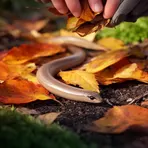
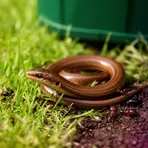
- In damp British gardens, the Anguis fragilis is often mistaken for a snake due to its smooth, legless body.
Examples
-
Children sometimes incorrectly believe the Anguis fragilis is blind because of its tiny eyes.
-
Researchers discovered a population of Anguis fragilis thriving in the forest undergrowth.
-
The Anguis fragilis is often found in gardens.
-
Did you see the Anguis fragilis in the garden?
-
The Anguis fragilis is a fascinating lizard that spends most of its time hidden underground.
-
Many gardeners appreciate the Anguis fragilis for its role in controlling pests in their yards.
-
While walking in the forest, I spotted an Anguis fragilis basking in a sunny spot on the ground.
Synonyms


Surface Forms
Morphology
Anguis + fragilis
This is a Latin scientific name (a taxonomic proper noun), so its meaning as 'slowworm' is not compositionally derived from the surface constituents for a B1 learner. The parts are Latin (and one is undefined here), and knowing them would not reliably lead a learner to the common English referent or the descriptive zoological sense, so the phrase is effectively idiomatic/opaque in everyday English.
Etymology
Anguis fragilis comes from the Latin words anguis ('snake') and fragilis ('fragile'). People may have called it a 'fragile snake' because it looks like a small snake and can easily lose its tail to escape, so the name fits this legless lizard today.