
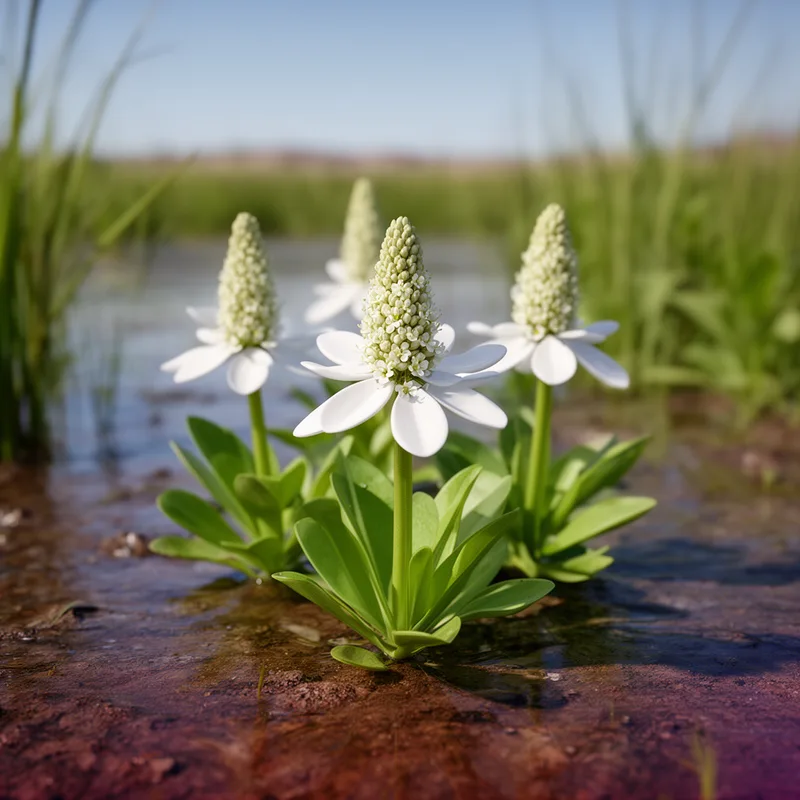
Anemopsis californica
- noun
- Specialized
- Anemopsis californica is often found growing in marshy areas throughout the southwestern United States.
Examples
-
The white bracts of Anemopsis californica can make it appear similar to members of the anemone family.
-
Traditional herbalists sometimes use the root of Anemopsis californica for its aromatic properties.
-
The Anemopsis californica is commonly found in wetland areas.
-
Did you know that Anemopsis californica has medicinal properties?
-
Anemopsis californica thrives in wet, marshy landscapes, making it a distinctive part of the southwestern flora.
-
With its striking white bracts, Anemopsis californica often attracts attention in local gardens.
-
The rootstock of Anemopsis californica is known for its strong aroma and is sometimes used in traditional remedies.
Synonyms

A plant from southwestern North America that grows in wet places and has strong-smelling roots and small white flower spikes
Surface Forms
Morphology
Anemopsis + californica
This is a Linnaean binomial composed of the genus name 'Anemopsis' and the specific epithet 'californica' (meaning 'of/from California'); together they denote the Anemopsis species associated with California. The meaning follows a predictable scientific naming convention (genus + geographic adjective), so a learner who knows both constituents can derive the referent.
Etymology
Anemopsis californica comes from Greek and a place name: anemopsis joins anemone and -opsis to mean 'looks like an anemone', and californica means 'from California'. So, because the plant has white, petal-like bracts that really 'look like' an anemone, the name is an easy way to remember this California marsh plant.

