
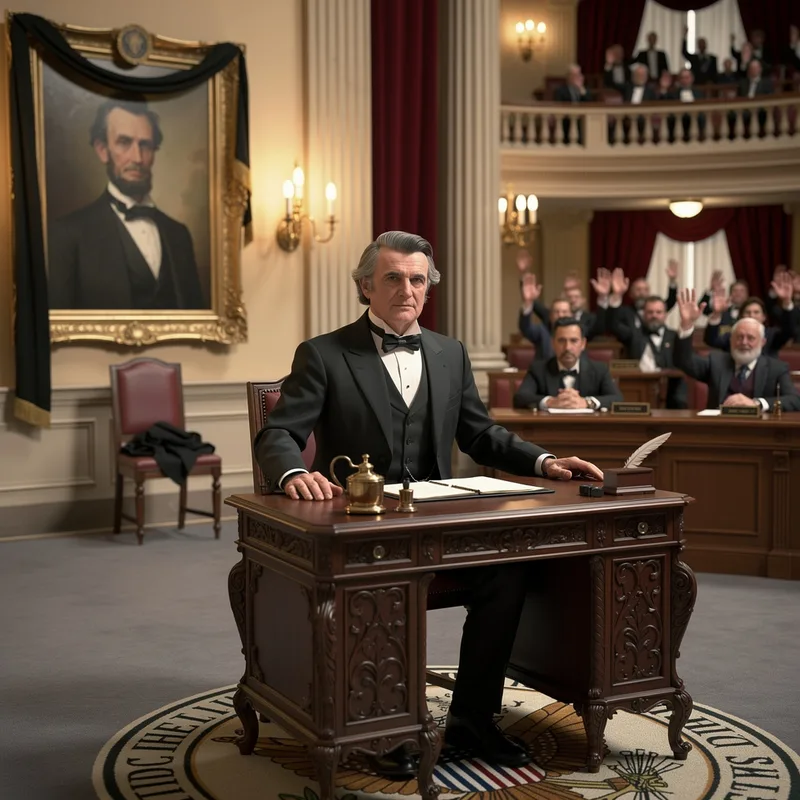
Andrew Johnson
 6
4.7

- proper noun
- /ˈændru ˈdʒɒnsən/
- Andrew Johnson was the 17th President of the United States, who took office after Lincoln's assassination in 1865.
- President Andrew Johnson
- impeachment of Andrew Johnson
- trial of Andrew Johnson
Examples
-
President Andrew Johnson banned fourteen categories of Southerners from acquiring this restoration to full citizenship without each first obtaining a presidential pardon and amnesty.
Academic text (2009) -
Both Andrew Johnson and Lyndon B. Johnson were Democrats.
-
Andrew Johnson, who succeeded Lincoln, was born in 1808.
-
You see, Andrew Johnson, Lincoln's second in command, knew John Wilkes Booth, and they weren't just acquaintances according to many historians.
-
During the administrations of Abraham Lincoln and Andrew Johnson, 1861-1869, and M968, Letters of Application and Recommendation During the Administration of Ulysses S. Grant, 1869-1877.
Academic text (2009) -
Submitted in response to President Andrew Johnson's Amnesty Proclamation of May 29, 1865 (also available on the subscription website Footnote.com).
Academic text (2009) -
In the historical context of American politics, Andrew Johnson was known for being impeached by Congress.
-
Andrew Johnson, born in 1808, faced significant challenges during his presidency following the Civil War.
Synonyms
 23
4.8
The 17th president of the United States who succeeded Abraham Lincoln and was impeached but acquitted by one vote
 2
5.8
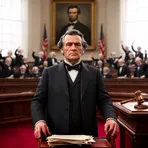
A United States leader who became president after Lincoln and was impeached but not removed
Surface Forms
Morphology
Andrew + Johnson
This is a personal name referring to a specific historical individual; knowing the constituent words 'Andrew' and 'Johnson' does not enable a learner to infer that it denotes the 17th U.S. president. Proper names are non-compositional and language-/culture-specific, so the referential identity and associated biographical meaning are opaque to a B1 learner who only knows the words.
Etymology
Andrew Johnson was the 17th president of the United States who took office after Abraham Lincoln was killed and later faced a trial in Congress to remove him from power. Remember him as the leader who stayed in office by just one vote, so his name often brings to mind a sudden, troubled change in leadership.