
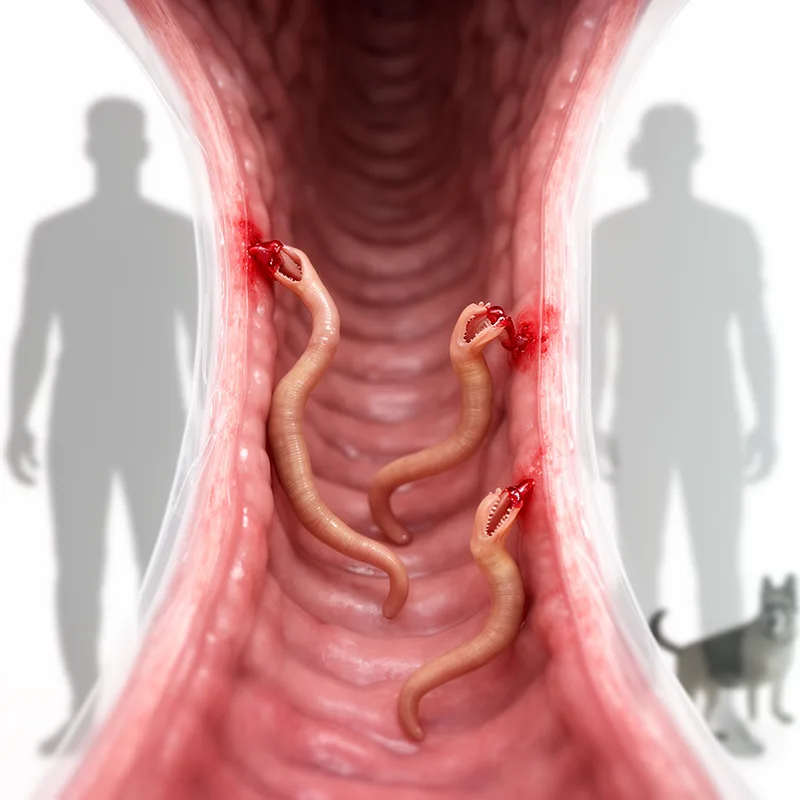
Ancylostomatidae
- noun
- /ˌæŋsɪloʊˈstoʊmətɪˌdeɪ/
- Specialized
- Studies have shown that Ancylostomatidae, commonly known as hookworms, can lead to severe anemia in humans and pets.
Examples
-
Veterinarians often screen for Ancylostomatidae in pets presenting with signs of anemia.
-
Understanding the life cycle of Ancylostomatidae is crucial for developing effective prevention programs.
-
Studies have shown that Ancylostomatidae can cause significant health issues in both humans and animals.
-
The Ancylostomatidae family includes several species of hookworms.
-
Many children in tropical regions suffer from Ancylostomatidae infections.
-
Understanding the transmission of Ancylostomatidae is essential for preventing infections in children living in warm climates.
-
Veterinarians recommend regular checks for Ancylostomatidae in dogs, especially if they exhibit symptoms like fatigue and weight loss.
Synonyms
 4
6.0
4
6.0

A small worm with a hooked mouth that lives in human or animal intestines and drinks blood
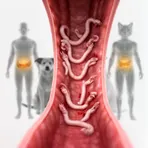
A group of hookworms that live in the intestines of animals, including humans, and can cause disease
Compounds
- Specialized
A group of hookworms that live in the intestines of animals, including humans, and can cause disease
Surface Forms
Etymology
Ancylostomatidae comes from Greek parts: ancyl- meaning 'hook', stoma meaning 'mouth', and the ending -idae meaning 'a family or group of animals'. So these are the 'hook-mouthed' worms, called hookworms, because their hooked mouth helps them attach to a body and can make people or animals sick.