
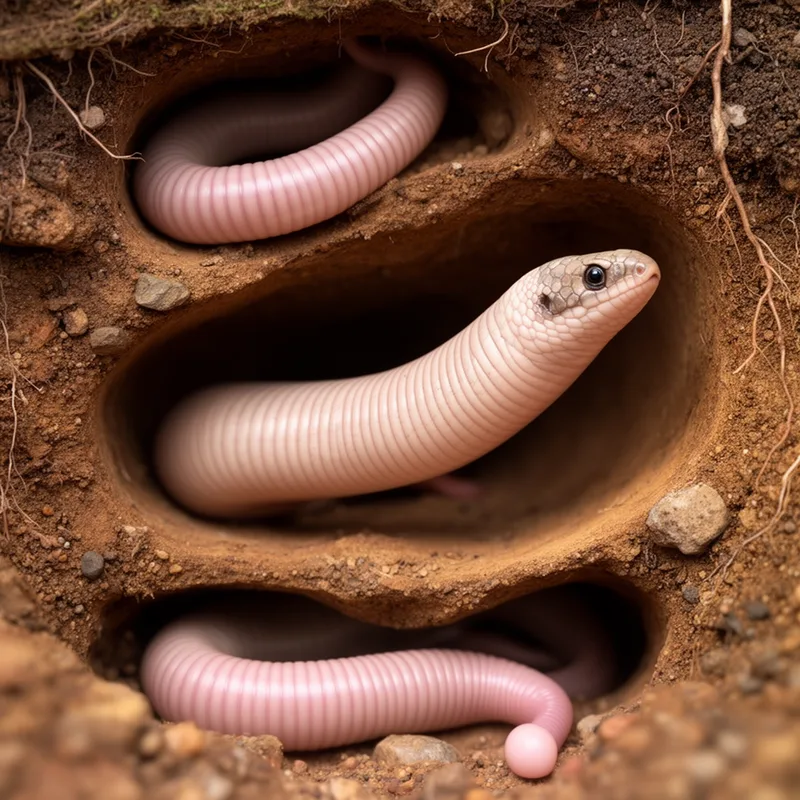
Amphisbaenidae
- noun
- /ˌæmfɪsˈbiːnɪdiː/
- Specialized
- Unlike snakes, the Amphisbaenidae have distinctive rings encircling their bodies.
Examples
-
The Amphisbaenidae are often mistaken for worms due to their elongated, limbless bodies.
-
The Amphisbaenidae possess unique adaptations for a subterranean lifestyle.
-
Scientists have discovered several fossil members of the Amphisbaenidae in South America.
-
Amphisbaenidae are fascinating reptiles.
-
The Amphisbaenidae family includes several unique species.
-
Researchers recently identified a new species of Amphisbaenidae that lives in underground burrows.
-
Fossils of Amphisbaenidae provide valuable insights into the evolution of burrowing reptiles.
Synonyms
A group of legless lizards that live mostly underground and look like worms

A reptile without legs that lives underground and looks like a worm
Compounds
- Specialized
A group of legless lizards that live mostly underground and look like worms
Surface Forms
Morphology
Amphisbaenidae = amphisbaena (opaque) = amphisbaena + idae
Formed by adding the specialized taxonomic family suffix '-idae' to the genus name 'Amphisbaena'; both elements are technical and not helpful for general learners to infer meaning.
Etymology
Amphisbaenidae comes from a Greek name for a two-headed snake: amphi- means 'both' or 'around' and bainein means 'to go', so the myth said it could 'go both ways'. That image helps remember these animals: Amphisbaenidae are limbless, burrowing 'worm lizards' that often move forwards and backwards in tunnels, and the ending -idae shows this is a family of animals.

