
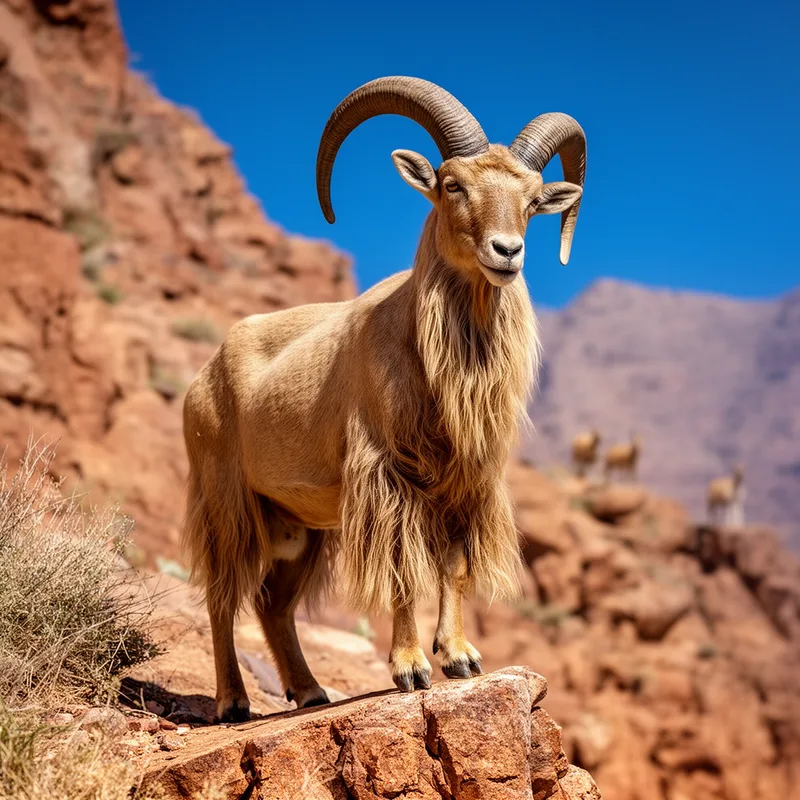
Ammotragus lervia
- noun
- Specialized
- The Ammotragus lervia is known for its impressive curved horns.
Examples
-
Zoologists studied the Ammotragus lervia to learn more about its adaptation to arid environments.
-
Visitors to the reserve were excited to spot an Ammotragus lervia among the cliffs.
-
The Ammotragus lervia inhabits the rocky mountains of northern Africa.
-
Have you ever seen an Ammotragus lervia in its natural habitat?
-
The Ammotragus lervia thrives in the rugged terrain of the Atlas Mountains.
-
In the wildlife sanctuary, we observed several Ammotragus lervia grazing together.
-
The conservation program aims to protect the Ammotragus lervia from habitat loss.
Synonyms
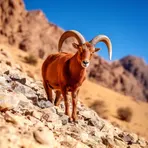
A wild sheep from North Africa with a reddish-brown coat and curved horns that lives on rocky slopes

A wild sheep from North Africa with curved horns and thick shaggy fur

A wild sheep from North Africa with reddish-brown coat and curved horns

A wild sheep from northern Africa with curved horns and a thick mane

A wild sheep from northern Africa with long hair on its neck and chest
Surface Forms
Morphology
Ammotragus + lervia
This is a Latin binomial: the genus name 'Ammotragus' (= wild sheep) signals that the phrase refers to a type/species of that genus, so part of the meaning (a kind of wild sheep) is inferable. However the species epithet 'lervia' has no lexical meaning in English and biological Latin names are a technical naming convention rather than ordinary compositional phrases, so the full specific sense is not predictable for a B1 learner.
Etymology
Ammotragus lervia may come from old words that give the picture of a 'sand goat', with ammos meaning sand and tragos meaning goat. The name fits because this goat-like wild sheep lives on dry, rocky hills, so it refers to the 'Barbary sheep' of North Africa.

