
Ambrosian
 1
9.9

- adjective
- /æmˈbroʊziən/
- Formal
- The Ambrosian liturgy includes unique prayers and readings that distinguish it from the Roman rite.
Examples
-
And Charles Borromeo was the archbishop of Milan, so I assume he offered the Ambrosian Liturgy.
Blog text (21) -
The four readings which are added to the Vespers, each followed by the Ambrosian equivalent of a gradual, are never taken from the New Testament.
Blog text (25) -
In the Swiss diocese of Lugano, there are a large number of Ambrosian parishes that keep the Ascension on the traditional day.
Blog text (25) -
The Ambrosian lectionary for Lent and Easter, based on the traditions of the rite, was issued in 1972; for the rest of the ecclesiastical year, a modified form of the new Roman lectionary has been used.
Blog text (25) -
We recently reported on the criticisms made by His Eminence Giacomo Cardinal Biffi against the new lectionary recently promulgated for the Ambrosian rite.
Blog text (25) -
Until recently, the reformed Ambrosian liturgy has kept the First Sunday of Advent on the Sunday after the 12th of November; the new lectionary returns to the historical Milanese custom of starting Advent on the Sunday after the feast of Saint Martin.
Blog text (25) -
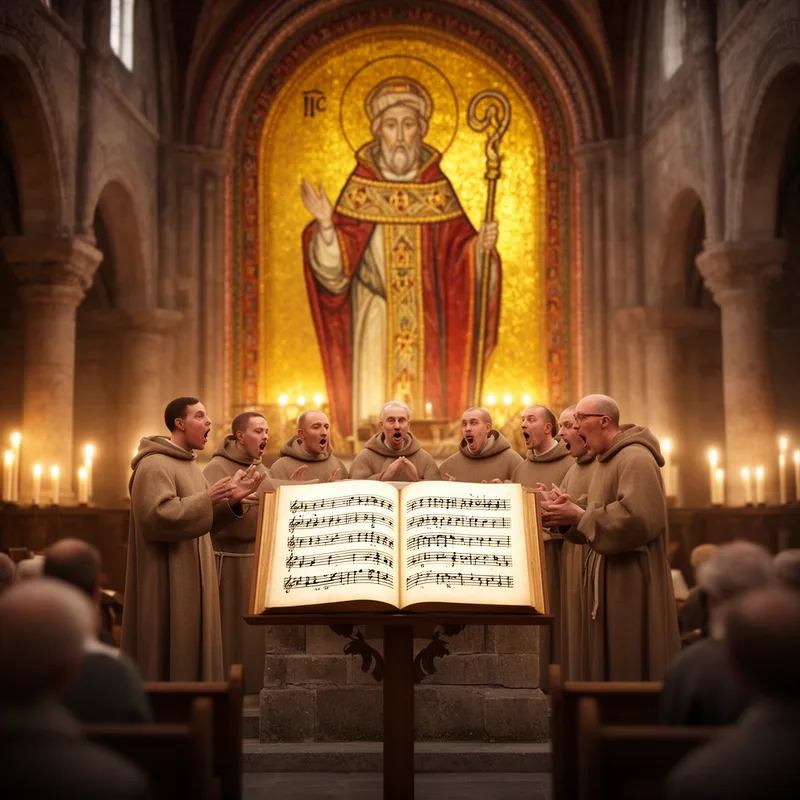
The Ambrosian style of chant is still performed in some churches in Milan.
-
She admired the rich melodies of the Ambrosian hymns during the service.
Surface Forms
Morphology
Etymology
Ambrosian comes from the name of Saint Ambrose, a famous bishop of Milan who helped shape church music and worship. So, Ambrosian describes the liturgy or chant that follows his style.