

Amboina pine
- noun
- Philippine
 :
pino de Amboina
:
pino de Amboina
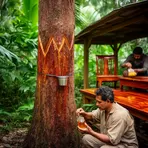
- The Amboina pine is often tapped for its valuable dammar resin.
Examples
-
Local craftsmen use timber from the Amboina pine for making furniture.
-
The forest reserve is home to a number of Amboina pine trees.
-
The Amboina pine is prized for its beautiful wood.
-
Many craftsmen prefer Amboina pines for fine furniture.
-
Local craftsmen use timber from the Amboina pine for making furniture.
-
The Amboina pine is often tapped for its valuable dammar resin.
-
The forest reserve is home to a number of Amboina pine trees.
Synonyms
A tropical tree from Indonesia and the Philippines that makes a resin used in furniture

A large evergreen tree from the Philippines and nearby islands that produces dammar resin

A large evergreen tree from the Moluccas and the Philippines that gives dammar resin

A tall tree that produces a hard clear resin used to make varnish
Surface Forms
Morphology
Amboina + pine
The noun phrase is a straightforward place-name + noun composition: 'Amboina' (a toponym) modifies 'pine', indicating a type of pine associated with that place. If a learner knows both constituents, they can readily infer it refers to a pine native to or from Amboina/Moluccas, so the meaning is compositionally transparent.
Etymology
Amboina pine likely comes from the island Amboina, now called 'Ambon' in Indonesia, where the tree grew in large numbers. English speakers added the word pine because the tree's tall shape and wood reminded them of the pine trees they knew, so the name points to both the place and the kind of tree.

