
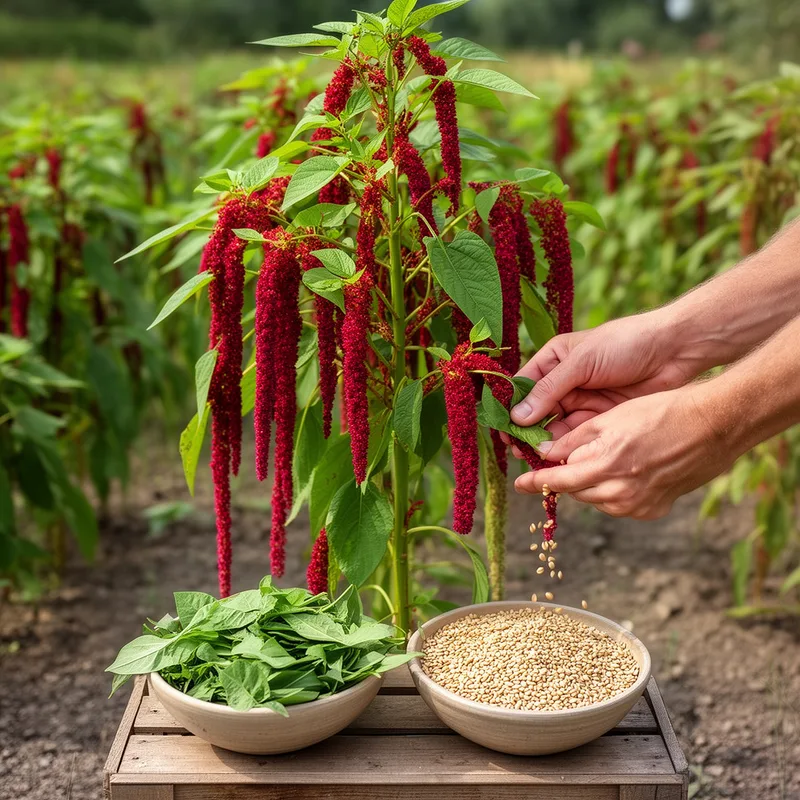
Amaranthus caudatus
- noun
- Specialized
- The leaves of Amaranthus caudatus are a nutritious addition to many traditional dishes.
Examples
-
Farmers in South America often grow Amaranthus caudatus for its grain-like seeds.
-
I planted Amaranthus caudatus in my garden this spring.
-
Researchers are studying the potential health benefits of consuming Amaranthus caudatus.
-
The leaves of Amaranthus caudatus are highly nutritious.
-
Farmers in South America often grow Amaranthus caudatus for its grain-like seeds.
-
The leaves of Amaranthus caudatus are a nutritious addition to many traditional dishes.
-
I planted Amaranthus caudatus in my garden this spring.
Synonyms

A tall plant from warm countries with long hanging red flowers whose leaves are eaten and seeds used like grain
Surface Forms
Morphology
Amaranthus + caudatus
This is a Latin binomial composed of the genus name 'Amaranthus' plus a specific epithet; a learner who knows the constituent words and the common convention that Latin binomials name species will readily infer it denotes a particular kind of amaranth. The additional details about cultivation and edibility are encyclopedic and not derivable from the words, but the core meaning 'a species of Amaranthus' is compositionally transparent and cross-linguistically recognizable.
Etymology
Amaranthus caudatus comes from old words: Amaranthus meaning 'unfading' and caudatus meaning 'tailed', because its long, hanging flowers look like tails and keep their colour for a long time. So the name helps people remember and identify the plant that is grown for its edible leaves and seeds.

