
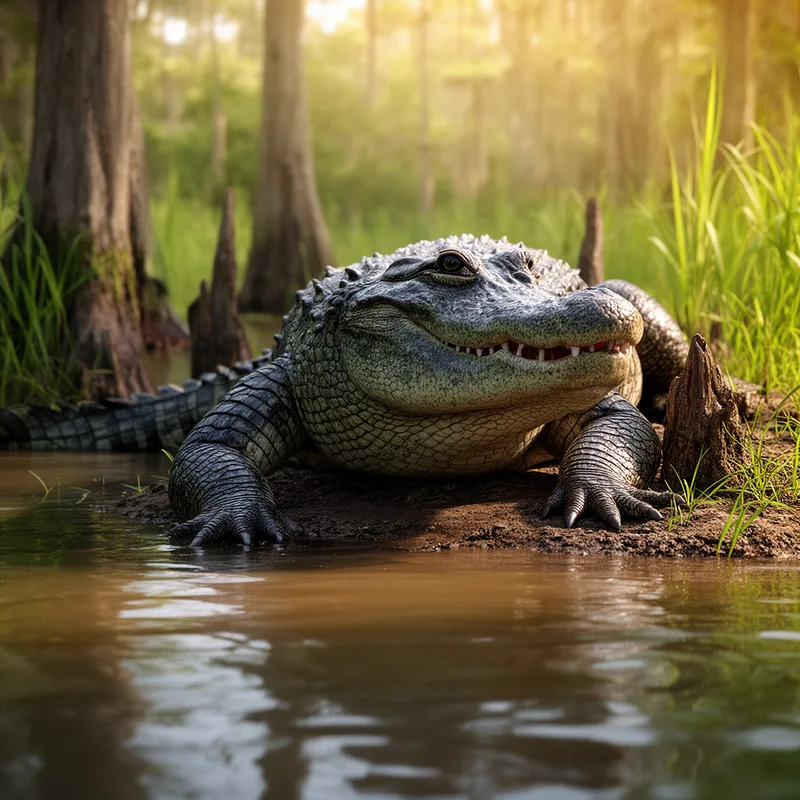
Alligator mississipiensis
- noun
- /ˌælɪˈɡeɪtər ˌmɪsɪˈsɪpiːˈɛnsɪs/
- Specialized
- The Alligator mississipiensis is often spotted sunning itself along riverbanks in Florida.
Examples
-
Biologists study the Alligator mississipiensis to monitor wetland health in Louisiana.
-
Did you know that the Alligator mississipiensis can grow up to 13 feet long?
-
Unlike its cousin in China, the Alligator mississipiensis is much larger and more widespread.
-
The Alligator mississipiensis is a fascinating reptile.
-
The Alligator mississipiensis is a key predator in the wetlands of the southeastern United States.
-
In the swamps of Louisiana, the Alligator mississipiensis plays an important role in the ecosystem.
-
Tourists often visit the Everglades to observe the Alligator mississipiensis in its natural habitat.
Synonyms
 1
4.2
1
4.2

A large dark reptile with a wide snout that lives in southeastern United States swamps
Surface Forms
Morphology
alligator + mississipiensis
The first constituent 'alligator' clearly signals the category (a type of reptile), so a B1 learner would recognize it as a kind of alligator. The second element is a Latin species epithet (and here misspelled) that is not an English word, so its specific geographic/ taxonomic meaning is opaque without prior exposure; overall the phrase gives the general category but not the precise species sense.
Etymology
Alligator mississipiensis comes from Spanish and a place name: early Spanish speakers said 'el lagarto', which means 'the lizard', and the species word mississipiensis is a Latin way of saying 'from the Mississippi'. So the full name pictures a 'lizard from the Mississippi' and points to the American alligator.