
Agrostemma githago
- noun
- UK
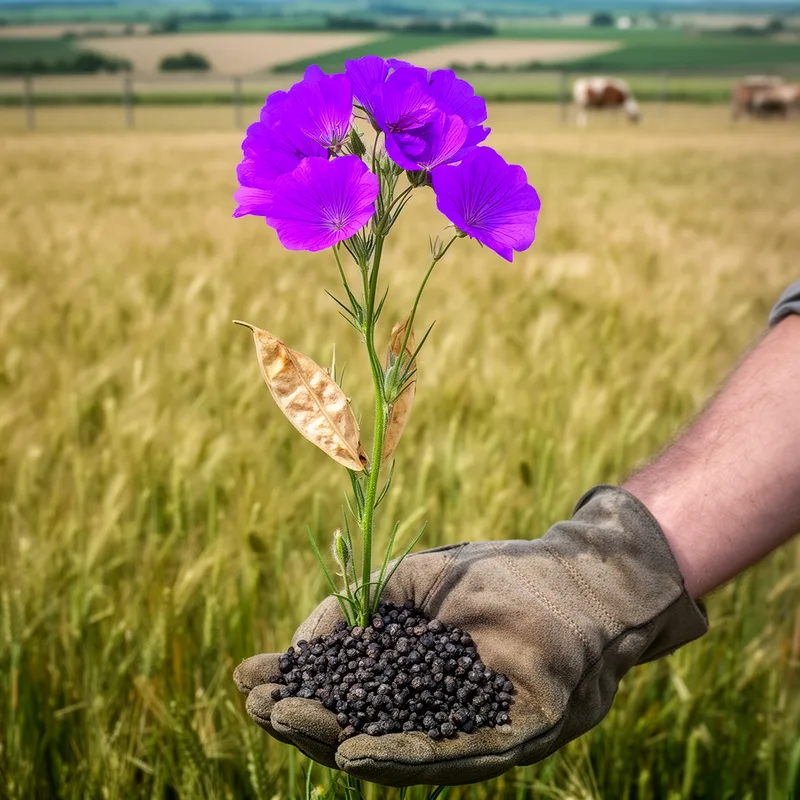
- The striking purple flowers of Agrostemma githago make it easy to spot among the wheat.
Examples
-
Farmers often remove Agrostemma githago from their fields because its seeds are poisonous to livestock.
-
While hiking in Europe, she found Agrostemma githago growing beside the old country road.
-
The Agrostemma githago is often found in abandoned fields.
-
Farmers often struggle with Agrostemma githago in their crops.
-
Farmers often remove Agrostemma githago from their fields because its seeds are poisonous to livestock.
-
The striking purple flowers of Agrostemma githago make it easy to spot among the wheat.
-
While hiking in Europe, she found Agrostemma githago growing beside the old country road.
Synonyms

A plant with bright purple, trumpet-shaped flowers and poisonous seeds that grows in grain fields and roadsides

A plant with large reddish-purple trumpet-shaped flowers and poisonous seeds that grows in fields and roadsides
Antonyms

Surface Forms
Morphology
Agrostemma + githago
This is a Latin binomial (genus + species) functioning as a taxonomic label rather than a compositional English phrase; a B1 learner who knows the constituent forms would not be able to infer details like being a European annual with poisonous seeds and trumpet-shaped flowers. 'Agrostemma' is a specialized botanical name and 'githago' is not a standard English word, so the overall meaning is arbitrary and not derivable from the parts.
Etymology
Agrostemma githago may come from old Greek words: agros meaning 'field' and stemma meaning 'wreath', because its bright, trumpet-shaped flowers often stood out like a ring of color in fields of grain. The second part, githago, links the plant to 'grain' or 'wheat', so the name points to a showy field weed (the corncockle) whose seeds are 'poisonous'.

